Introduction
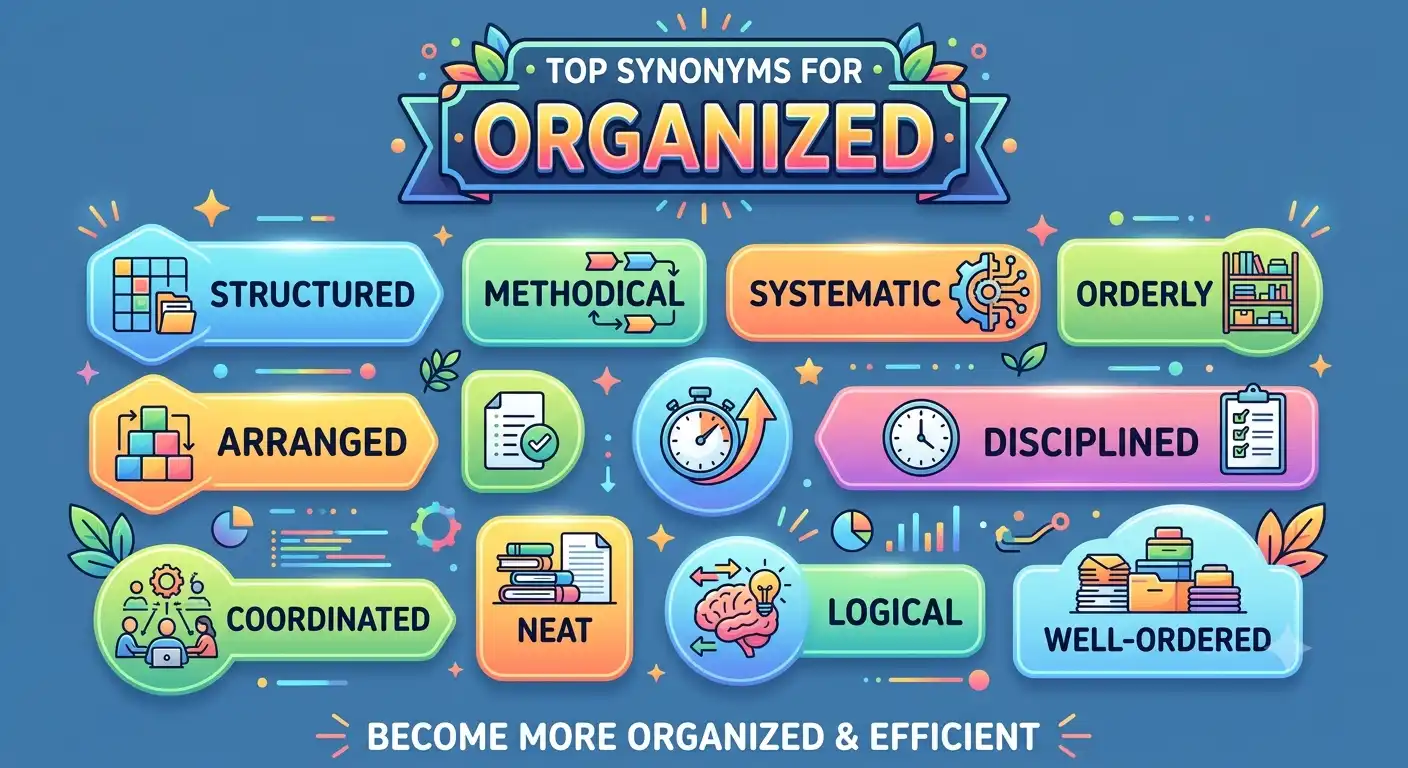
Synonyms for organized are alternative terms and expressions used to describe neatness, good planning, and structural order. Finding the right synonyms for organized helps you avoid repeating the same basic descriptor, keeping your writing fresh, precise, and professional. Imagine staring at your desk buried under piles of paper, or looking at a messy paragraph that lacks any sense of structure. You want to describe a clean, systematic plan, but you keep using the exact same worn-out word. It feels repetitive and dull. Good writing thrives on variety and clarity. When you discover different synonyms for organized, your sentences instantly become more vivid, accurate, and captivating for your readers.
For example, instead of writing “She had an organized workspace,” you can say, “She had an impeccable workspace.”
In very simple English, organized means put in order or arranged neatly.
This word is useful for:
- Students writing clear, structured essays and reports.
- Bloggers creating neat and easy-to-read stories.
- Content writers building precise and professional copy.
- Daily English users speaking with greater clarity.
“For every minute spent organizing, an hour is earned.” — Benjamin Franklin
“Order is the shape upon which beauty and justice depend.” — Pearl S. Buck
Linguistic Profile of “Organized”
- Connotative Meaning: Systematic, efficient, disciplined, tidy, and structured.
- Etymology: Originates from Greek organon (instrument or tool), evolving through Late Latin organizare into Middle English.
- Pronunciation (US): /ˈɔːrɡənaɪzd/
- Pronunciation (UK): /ˈɔːɡənaɪzd/
- Syllables: Three syllables total (or-gan-ized).
- Affixation Pattern: Base verb root + past participle suffix -ed (organize + -ed).
Comparison Table
| Keyword | Meaning | Usage Type | Context |
|---|---|---|---|
| Organized | Put in order or well-planned | Casual / Standard | Everyday speech and general writing |
| Tidy | Neat and arranged in proper order | Casual / Descriptive | Homes, desks, and personal habits |
| Systematic | Done according to a fixed plan or system | Professional / Academic | Business processes and research methods |
| Methodical | Orderly and regular in habit or procedure | Formal / Professional | Step-by-step tasks and workflows |
| Efficient | Achieving maximum productivity with minimum waste | Professional / Technical | Business operations and time management |
| Structured | Constructed or arranged in a clear pattern | Academic / Professional | Writing outlines, plans, and projects |
1. Tidy
Pronunciation (US & UK): /ˈtaɪdi/ Meaning: It means neat and arranged in proper order. Examples:
- She kept her bedroom very tidy and clean.
- Please put your toys in a tidy box.
2. Neat
Pronunciation (US & UK): /niːt/ Meaning: It means clean, orderly, and well-arranged. Examples:
- His handwriting is always neat and easy to read.
- She packed her clothes in a neat suitcase.
3. Orderly
Pronunciation (US & UK): /ˈɔːrdərli/ Meaning: It means neatly arranged according to a rule or plan. Examples:
- The students formed an orderly line outside.
- He keeps an orderly stack of books on his desk.
4. Systematic
Pronunciation (US & UK): /ˌsɪstəˈmætɪk/ Meaning: It means done according to a fixed plan or system. Examples:
- The scientist followed a systematic testing method.
- We need a systematic approach to solve this bug.
5. Methodical
Pronunciation (US & UK): /məˈθɑːdɪkl/ Meaning: It means done in a careful and orderly way. Examples:
- She took a methodical approach to cleaning the house.
- The mechanic did a methodical check of the engine.
6. Structured
Pronunciation (US & UK): /ˈstrʌktʃərd/ Meaning: It means built or arranged in a clear pattern. Examples:
- The daily camp schedule is very well structured.
- Writers need a structured outline for good essays.
7. Efficient
Pronunciation (US & UK): /ɪˈfɪʃnt/ Meaning: It means working well without wasting time or energy. Examples:
- The new kitchen appliance is fast and efficient.
- She found an efficient way to finish her chores.
8. Logical
Pronunciation (US & UK): /ˈlɑːdʒɪkl/ Meaning: It means making sense and following clear reasoning. Examples:
- His plan for the project is completely logical.
- We followed a logical sequence of steps.
9. Coherent
Pronunciation (US & UK): /koʊˈhɪrənt/ Meaning: It means clear, logical, and well-connected. Examples:
- She gave a coherent speech about local safety.
- The essay lacked a coherent opening paragraph.
10. Polished
Pronunciation (US & UK): /ˈpɑːlɪʃt/ Meaning: It means refined, smooth, and carefully finished. Examples:
- He handed in a polished draft of his story.
- The wooden floor looked shiny and polished.
11. Impeccable
Pronunciation (US & UK): /ɪmˈpɛkəbl/ Meaning: It means flawless and perfectly arranged. Examples:
- Her desk is always in impeccable condition.
- The dancer showed impeccable timing on stage.
12. Immaculate
Pronunciation (US & UK): /ɪˈmækjulət/ Meaning: It means perfectly clean, neat, or tidy. Examples:
- They walked into an immaculate hotel room.
- He wore an immaculate white suit to the party.
13. Shipshape
Pronunciation (US & UK): /ˈʃɪpʃeɪp/ Meaning: It means clean, neat, and in good order. Examples:
- We got the garage shipshape before the weekend.
- The captain kept the sailing boat shipshape.
14. Well-arranged
Pronunciation (US & UK): /wɛl əˈreɪndʒd/ Meaning: It means carefully set up in good order. Examples:
- The museum had a well-arranged display of art.
- Her schedule is well-arranged for busy weeks.
15. Well-planned
Pronunciation (US & UK): /wɛl plænd/ Meaning: It means carefully thought out ahead of time. Examples:
- The surprise party was a well-planned event.
- They executed a well-planned marketing strategy.
16. Well-ordered
Pronunciation (US & UK): /wɛl ˈɔːrdərd/ Meaning: It means managed and arranged with good control. Examples:
- The library is a quiet, well-ordered space.
- He prefers living in a calm, well-ordered home.
17. Disciplined
Pronunciation (US & UK): /ˈdɪsəplɪnd/ Meaning: It means showing careful control and good habits. Examples:
- The disciplined runner wakes up early every day.
- She maintains a disciplined study routine.
18. Controlled
Pronunciation (US & UK): /kənˈtroʊld/ Meaning: It means kept in order by careful management. Examples:
- The fire was kept in a controlled burn zone.
- He gave a calm and controlled response.
19. Regulated
Pronunciation (US & UK): /ˈrɛɡjuleɪtɪd/ Meaning: It means controlled by rules or systematic laws. Examples:
- The water temperature is carefully regulated here.
- Schools follow a regulated daily timetable.
20. Harmonious
Pronunciation (US & UK): /hɑːrˈmoʊniəs/ Meaning: It means forming a pleasing, orderly whole. Examples:
- The colors in the room look harmonious together.
- They live in a peaceful and harmonious neighborhood.
21. Symmetrical
Pronunciation (US & UK): /sɪˈmɛtrɪkl/ Meaning: It means balanced and matching on both sides. Examples:
- The garden design features symmetrical flower beds.
- Her sketch showed a symmetrical butterfly wing.
22. Balanced
Pronunciation (US & UK): /ˈbælənst/ Meaning: It means having equal and proper proportions. Examples:
- Eating a balanced diet keeps you healthy.
- The budget report looks balanced this month.
23. Streamlined
Pronunciation (US & UK): /ˈstriːmlaɪnd/ Meaning: It means designed to be more efficient and simple. Examples:
- The company streamlined its hiring process.
- New software makes online shopping streamlined.
24. Customary
Pronunciation (US & UK): /ˈkʌstəmeri/ Meaning: It means following a regular or habitual pattern. Examples:
- He sat in his customary chair by the window.
- It is customary to greet guests warmly.
25. Routine
Pronunciation (US & UK): /ruːˈtiːn/ Meaning: It means done as part of a regular procedure. Examples:
- Morning exercise is part of her daily routine.
- The doctor performed a routine health check.
26. Custom-made
Pronunciation (US & UK): /ˈkʌstəm meɪd/ Meaning: It means built to fit a specific order or plan. Examples:
- She bought custom-made curtains for her living room.
- The carpenter built a custom-made bookshelf.
27. Categorized
Pronunciation (US & UK): /ˈkætəɡəraɪzd/ Meaning: It means sorted into clear groups or classes. Examples:
- The files were categorized by date and author.
- Books in the library are categorized by topic.
28. Classified
Pronunciation (US & UK): /ˈklæsɪfaɪd/ Meaning: It means arranged into official groups or categories. Examples:
- The old letters were classified by year.
- Workers sorted the mail into classified bins.
29. Indexed
Pronunciation (US & UK): /ˈɪndɛkst/ Meaning: It means listed in alphabetical or numerical order. Examples:
- The recipe book is neatly indexed in the back.
- Researchers used an indexed archive of documents.
30. Tabulated
Pronunciation (US & UK): /ˈtæbjuleɪtɪd/ Meaning: It means arranged into tables or columns. Examples:
- The survey results were tabulated in a report.
- Data was tabulated to show monthly growth.
31. Cataloged
Pronunciation (US & UK): /ˈkætəlɔːɡd/ Meaning: It means entered into a complete list or system. Examples:
- The museum cataloged every ancient coin.
- She cataloged her book collection by genre.
32. Documented
Pronunciation (US & UK): /ˈdɑːkjumɛntɪd/ Meaning: It means recorded and supported with written proof. Examples:
- The historian documented the local events carefully.
- Every step of the experiment was documented.
33. Meticulous
Pronunciation (US & UK): /məˈtɪkjələs/ Meaning: It means showing great attention to detail; very careful. Examples:
- She was meticulous when stitching the dress.
- The artist did meticulous work on the painting.
34. Precise
Pronunciation (US & UK): /prɪˈsaɪs/ Meaning: It means exact, clear, and carefully detailed. Examples:
- Give me the precise measurement of the wood.
- He gave a precise answer to the question.
35. Exact
Pronunciation (US & UK): /ɪɡˈzækt/ Meaning: It means completely correct and accurate in every detail. Examples:
- What is the exact time of the train arrival?
- She remembered the exact words he spoke.
36. Neat-handed
Pronunciation (US & UK): /niːt ˈhændɪd/ Meaning: It means skillful and tidy in manual work. Examples:
- The baker was neat-handed with icing the cake.
- She made neat-handed folds on the cloth.
37. Clockwork
Pronunciation (US & UK): /ˈklɑːkwɜːrk/ Meaning: It means moving or running with perfect regularity. Examples:
- The morning meeting ran like clockwork.
- The transit system operates with clockwork precision.
38. Seamless
Pronunciation (US & UK): /ˈsiːmləs/ Meaning: It means smooth and continuous without any flaws. Examples:
- The team made a seamless transition to remote work.
- The movie had a seamless blend of music and art.
39. Synchronized
Pronunciation (US & UK): /ˈsɪŋkrənaɪzd/ Meaning: It means happening at the same exact time or pace. Examples:
- The swimmers performed synchronized diving routines.
- Their watches were synchronized before the race.
40. Coordinated
Pronunciation (US & UK): /koʊˈɔːrdɪneɪtɪd/ Meaning: It means brought together to work smoothly as a team. Examples:
- The dance group wore coordinated blue outfits.
- Volunteers made a coordinated effort to clean up.
41. Harmonized
Pronunciation (US & UK): /ˈhɑːrmənaɪzd/ Meaning: It means adjusted to fit together in agreement. Examples:
- The countries harmonized their trade laws.
- Their voices harmonized beautifully in the choir.
42. Integrated
Pronunciation (US & UK): /ˈɪntɪɡreɪtɪd/ Meaning: It means combined parts working together as one. Examples:
- The school has an integrated learning program.
- The new app features integrated payment options.
43. Unified
Pronunciation (US & UK): /ˈjuːnɪfaɪd/ Meaning: It means joined together into a single complete unit. Examples:
- The players stood as a unified team.
- Citizens made a unified call for community parks.
44. Prepared
Pronunciation (US & UK): /prɪˈpɛrd/ Meaning: It means made ready for use or action. Examples:
- She came prepared with notes for the meeting.
- We are fully prepared for the upcoming test.
45. Equipped
Pronunciation (US & UK): /ɪˈkwɪpt/ Meaning: It means supplied with necessary tools or gear. Examples:
- The rescue team was well equipped for the hike.
- Our school lab is equipped with modern computers.
46. Fitted
Pronunciation (US & UK): /ˈfɪtɪd/ Meaning: It means adjusted or made to suit a specific shape. Examples:
- He wore a fitted suit for the interview.
- The carpenter fitted the shelf into the wall.
47. Arranged
Pronunciation (US & UK): /əˈreɪndʒd/ Meaning: It means put in a neat, specific order or position. Examples:
- Flowers were arranged nicely in a glass vase.
- Chairs were arranged in rows for the speaker.
48. Sorted
Pronunciation (US & UK): /ˈsɔːrtɪd/ Meaning: It means separated into groups by type or kind. Examples:
- She sorted the laundry by colors and whites.
- The letters were sorted into different mail slots.
49. Grouped
Pronunciation (US & UK): /ɡruːpt/ Meaning: It means gathered or placed together in sets. Examples:
- Students were grouped into teams of four.
- Items in the shop are grouped by category.
50. Handled
Pronunciation (US & UK): /ˈhændəld/ Meaning: It means managed or dealt with in an orderly way. Examples:
- She handled the difficult situation with calm grace.
- The customer service rep handled my request.
Antonyms of “Organized”
Because “organized” describes order, planning, and neatness, its direct opposites point to confusion, disorder, and lack of structure. Direct antonyms include:
- Disorganized
- Messy
- Chaotic
- Cluttered
- Haphazard
- Untidy
Prototype Meaning and Categorization
As a descriptive adjective, organized belongs to the functional category of qualitative evaluative modifiers. Its prototypical function is to attribute structure, tidiness, or operational efficiency to a person, space, or process, making complex tasks clear and manageable.
Frequently Asked Questions
What does “organized” mean?
“Organized” means put into a neat, systematic order or planned carefully ahead of time so things run smoothly.
Is “organized” formal or informal?
It is a standard, versatile word used naturally in casual daily speech, professional workplaces, and formal academic writing.
Can I use “organized” to describe a person?
Yes, you can describe someone as organized if they keep their schedule, workspace, and tasks neat and well-planned.
How do I avoid repeating “organized” too often?
You can swap it out with alternative terms from our list, such as “tidy,” “systematic,” “methodical,” or “structured,” depending on your context.
What is the best alternative for academic writing?
In formal academic papers or business reports, words like “systematic,” “structured,” or “methodical” work wonderfully to maintain a professional tone.
Conclusion
Mastering vocabulary and expanding your collection of synonyms for organized transforms your writing from average to exceptional. When you deliberately choose varied descriptors, your sentences flow smoothly, hold reader interest, and project confidence. Learning synonyms improves writing by banishing repetition, enhances blogging by keeping audience engagement high, elevates speaking by adding natural rhythm, and sharpens overall communication.
Try practicing these words today in your daily emails, school essays, and conversations with friends. Small changes to your everyday vocabulary make a massive difference in how people understand and enjoy your message. Keep experimenting with language, stay curious, and watch your writing skills grow stronger every single day!
“Let all things be done decently and in order.” — Bible
“The more you practice the art of thankful thinking, the more you will have to be thankful for.” — Norman Vincent Peale
“Simplicity is the ultimate sophistication.” — Leonardo da Vinci

Andrew Collins is an academic English educator with over 12 years of experience helping university students, IELTS candidates, and ESL learners improve their writing vocabulary.