Introduction
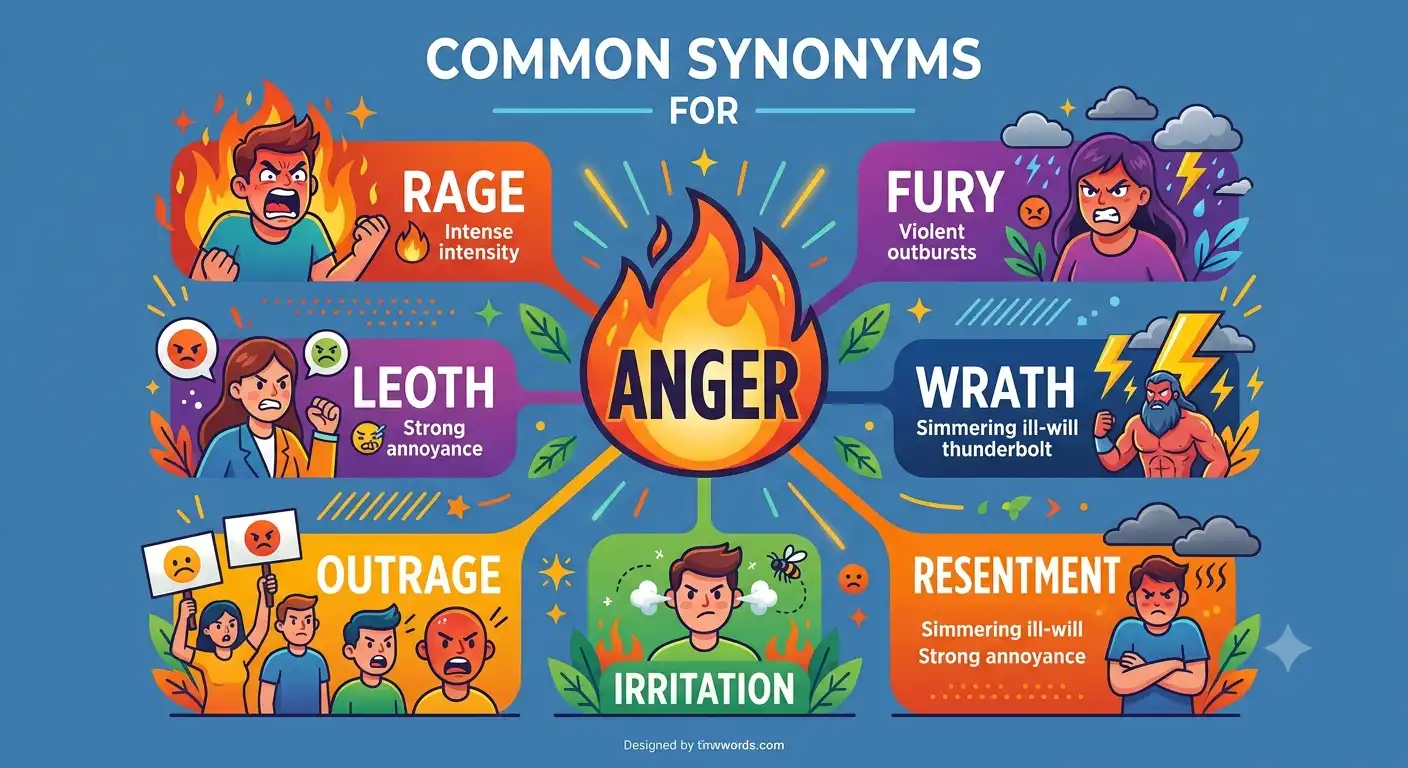
Synonyms for anger are alternative words and expressions used to describe strong feelings of displeasure, frustration, and fury. Finding the right synonyms for anger helps you avoid repeating the same basic emotion term, keeping your writing expressive, precise, and powerful. Imagine writing an intense story or a serious essay, but you keep using the same tired word whenever a character feels mad. It feels repetitive, flat, and unconvincing. Great writing thrives on emotional variety and clarity. When you discover different synonyms for anger, your sentences instantly become more vivid, accurate, and emotionally captivating for your readers.
For example, instead of writing “He felt deep anger when his car broke down,” you can say, “He felt deep fury when his car broke down.”
In very simple English, anger means a strong feeling of being mad or upset.
This word is useful for:
- Students writing expressive stories and character analyses.
- Bloggers crafting engaging emotional narratives.
- Content writers building compelling character descriptions.
- Daily English users communicating their feelings precisely.
“For every minute you remain angry, you give up sixty seconds of peace of mind.” — Ralph Waldo Emerson
“Speak when you are angry and you will make the best speech you will ever regret.” — Ambrose Bierce
Linguistic Profile of “Anger”
- Connotative Meaning: Intensity, frustration, resentment, emotional heat, and hostility.
- Etymology: Originates from Old Norse angr, meaning grief, trouble, or affliction, related to Latin angere (to choke or distress).
- Pronunciation (US): /ˈæŋɡər/
- Pronunciation (UK): /ˈæŋɡə/
- Syllables: Two syllables total (an-ger).
- Affixation Pattern: Root noun form (derived from the adjective angry via root conversion).
Comparison Table
| Keyword | Meaning | Usage Type | Context |
|---|---|---|---|
| Anger | Strong feeling of displeasure | Casual / Standard | Everyday speech and general writing |
| Rage | Violent and uncontrollable anger | Emotional / Intense | Dramatic fiction and high stress |
| Fury | Wild and fierce anger | Expressive / Literary | Stories and passionate expression |
| Irritation | Mild annoyance or displeasure | Casual / Professional | Daily workplace and minor frustrations |
| Resentment | Bitter indignation at unfair treatment | Professional / Psychological | Personal relationships and reflections |
| Wrath | Extreme or vengeful anger | Formal / Literary | Epic storytelling and formal prose |
1. Rage
Pronunciation (US & UK): /reɪdʒ/ Meaning: It means wild and uncontrollable anger. Examples:
- He slammed the door in a fit of rage.
- Road rage causes dangerous driving habits.
2. Fury
Pronunciation (US & UK): /ˈfjʊri/ Meaning: It means fierce and intense anger. Examples:
- Her face turned red with sudden fury.
- The storm hit with great wind and fury.
3. Wrath
Pronunciation (US & UK): /ræθ/ Meaning: It means extreme anger or vengeance. Examples:
- He feared the wrath of his strict boss.
- The king showed his royal wrath today.
4. Ire
Pronunciation (US & UK): /ˈaɪər/ (US), /ˈaɪə/ (UK) Meaning: It means sharp anger or displeasure. Examples:
- The new tax law drew public ire.
- His rude comment provoked her immediate ire.
5. Indignation
Pronunciation (US & UK): /ˌɪndɪɡˈneɪʃn/ Meaning: It means anger caused by unfair treatment. Examples:
- She felt great indignation at the false accusation.
- Workers voiced their moral indignation over pay cuts.
6. Resentment
Pronunciation (US & UK): /rɪˈzɛntmənt/ Meaning: It means bitter anger over being treated unfairly. Examples:
- Years of unfair rules built quiet resentment.
- He held deep resentment toward his old partner.
7. Annoyance
Pronunciation (US & UK): /əˈnɔɪəns/ Meaning: It means a feeling of slight anger or bother. Examples:
- A loud buzzing sound caused her annoyance.
- He hid his annoyance behind a polite smile.
8. Irritation
Pronunciation (US & UK): /ˌɪrɪˈteɪʃn/ Meaning: It means mild anger or impatience. Examples:
- Traffic jams cause daily morning irritation.
- She rubbed her eyes in tired irritation.
9. Vexation
Pronunciation (US & UK): /vɛkˈseɪʃn/ Meaning: It means a state of being annoyed or worried. Examples:
- Missing the train caused him great vexation.
- She sighed in deep vexation over the lost keys.
10. Exasperation
Pronunciation (US & UK): /ɪɡˌzæspəˈreɪʃn/ Meaning: It means extreme annoyance and frustration. Examples:
- He threw his hands up in total exasperation.
- Her constant questions led to his exasperation.
11. Frustration
Pronunciation (US & UK): /frʌˈstreɪʃn/ Meaning: It means the feeling of being upset from blocked goals. Examples:
- Learning a hard puzzle brings some frustration.
- She let out a cry of pure frustration.
12. Displeasure
Pronunciation (US & UK): /dɪsˈplɛʒər/ (US), /ˈdɪsˈplɛʒə/ (UK) Meaning: It means a feeling of mild dissatisfaction or anger. Examples:
- The teacher showed displeasure at the noisy class.
- He expressed his displeasure with the cold meal.
13. Dissatisfaction
Pronunciation (US & UK): /dɪsˌsætɪsˈfækʃn/ Meaning: It means the feeling of not being pleased. Examples:
- Customers voiced dissatisfaction with the broken toy.
- There is growing dissatisfaction with the schedule.
14. Chagrin
Pronunciation (US & UK): /ʃəˈɡrɪn/ Meaning: It means distress or embarrassment from failure. Examples:
- To his chagrin, he dropped his phone.
- She felt deep chagrin when she forgot her lines.
15. Umbrae / Umbrage
Pronunciation (US & UK): /ˈʌmbrɪdʒ/ Meaning: It means offense or annoyance taken at something. Examples:
- He took great umbrage at her blunt remark.
- She felt umbrage when her ideas were ignored.
16. Pique
Pronunciation (US & UK): /piːk/ Meaning: It means a sudden feeling of wounded pride and anger. Examples:
- He left the room in a fit of pique.
- Her pride felt a sharp pique after the loss.
17. Spleen
Pronunciation (US & UK): /spliːn/ Meaning: It means bad temper or vented anger. Examples:
- He vented his spleen on the poor waiter.
- She held much hidden spleen in her heart.
18. Bile
Pronunciation (US & UK): /baɪl/ Meaning: It means bitter anger or malice. Examples:
- His speech was full of bitter bile.
- She swallowed her bile and stayed calm.
19. Gall
Pronunciation (US & UK): /ɡɔːl/ Meaning: It means bitter resentment or bold nerve. Examples:
- He had the gall to blame others for his mess.
- Past wrongs left a gall in his memory.
20. Rancor
Pronunciation (US & UK): /ˈræŋkər/ (US), /ˈræŋkə/ (UK) Meaning: It means bitter, lasting resentment or anger. Examples:
- The old neighbors parted ways without rancor.
- Their business deal ended in deep rancor.
21. Malice
Pronunciation (US & UK): /ˈmælɪs/ Meaning: It means the desire to harm others out of anger. Examples:
- He spoke without any malice or bad intent.
- Her harsh words were driven by pure malice.
22. Spite
Pronunciation (US & UK): /spaɪt/ Meaning: It means a petty desire to annoy or hurt. Examples:
- He refused to help her purely out of spite.
- She hid his keys in a moment of spite.
23. Malvolence
Pronunciation (US & UK): /məˈlɑːvələns/ Meaning: It means wishing evil or harm upon someone. Examples:
- The villain stared with dark malvolence.
- Her eyes showed cold malvolence and anger.
24. Hostility
Pronunciation (US & UK): /hɑːˈstɪləti/ Meaning: It means unfriendliness and aggressive anger. Examples:
- Tension and hostility filled the meeting room.
- They showed clear hostility toward new ideas.
25. Antagonism
Pronunciation (US & UK): /ænˈtæɡənɪzəm/ Meaning: It means active opposition or hostility. Examples:
- Political rivalry led to open antagonism.
- There was strong antagonism between the teams.
26. Bitterness
Pronunciation (US & UK): /ˈbɪtərnəs/ (US), /ˈbɪtənəs/ (UK) Meaning: It means anger and disappointment stored over time. Examples:
- He spoke of his past with deep bitterness.
- Bitterness can poison a joyful friendship.
27. Acrimony
Pronunciation (US & UK): /ˈækrɪmoʊni/ Meaning: It means harshness or bitterness in speech or temper. Examples:
- The divorce ended with bitter acrimony.
- Debate filled the room with sharp acrimony.
28. Asperity
Pronunciation (US & UK): /əˈspɛrəti/ Meaning: It means harshness of tone or temper. Examples:
- “Quiet down!” she said with sudden asperity.
- His reply lacked warmth and had harsh asperity.
29. Tartness
Pronunciation (US & UK): /ˈtɑːrtnəs/ Meaning: It means sharp or sour manner in speech. Examples:
- Her tartness caught everyone by surprise.
- He spoke with a certain tartness today.
30. Tetchiness
Pronunciation (US & UK): /ˈtɛtʃinəs/ Meaning: It means bad-tempered touchiness or irritability. Examples:
- Lack of sleep caused his morning tetchiness.
- She apologized for her sudden tetchiness.
31. Peevishness
Pronunciation (US & UK): /ˈpiːvɪʃnəs/ Meaning: It means silly bad temper over small things. Examples:
- The tired toddler showed unusual peevishness.
- He regretted his afternoon peevishness.
32. Crossness
Pronunciation (US & UK): /ˈkrɔːsnəs/ Meaning: It means irritable bad temper. Examples:
- Her crossness faded after a warm cup of tea.
- He showed unexpected crossness at breakfast.
33. Irascibility
Pronunciation (US & UK): /ɪˌræsəˈbɪləti/ Meaning: It means the quality of being easily angered. Examples:
- His growing irascibility worried his friends.
- The old man’s irascibility was well known.
34. Hotheadedness
Pronunciation (US & UK): /ˈhɑːtˌhɛdɪdnəs/ Meaning: It means acting quickly out of rash anger. Examples:
- His hotheadedness landed him in trouble.
- Cool your hotheadedness before making choices.
35. Tempestuousness
Pronunciation (US & UK): /tɛmˈpɛstʃuəsnəs/ Meaning: It means stormy and violent emotional outbursts. Examples:
- The actor was known for his tempestuousness.
- Her tempestuousness made teamwork hard.
36. Fury-driven
Pronunciation (US & UK): /ˈfjʊri ˈdrɪvən/ Meaning: It means pushed forward by intense rage. Examples:
- He made a fury-driven rush to the door.
- Her fury-driven words shocked the crowd.
37. Fuming
Pronunciation (US & UK): /ˈfjuːmɪŋ/ Meaning: It means showing quiet, burning anger. Examples:
- He sat at his desk, silently fuming.
- She was fuming over the unfair penalty.
38. Seething
Pronunciation (US & UK): /ˈsiːðɪŋ/ Meaning: It means boiling with suppressed anger. Examples:
- Under his calm look, he was seething inside.
- Her seething rage was hard to hide.
39. Boiling
Pronunciation (US & UK): /ˈbɔɪlɪŋ/ Meaning: It means reaching a high point of anger. Examples:
- His blood was boiling after the insult.
- She felt a boiling anger rising up.
40. Livid
Pronunciation (US & UK): /ˈlɪvɪd/ Meaning: It means furiously angry or dark with rage. Examples:
- Dad was livid when he saw the dented car.
- She went livid upon hearing the bad news.
41. Incensed
Pronunciation (US & UK): /ɪnˈsɛnst/ Meaning: It means extremely angry or enraged. Examples:
- Citizens were incensed by the broken promises.
- He felt incensed by the unfair treatment.
42. Enraged
Pronunciation (US & UK): /ɪnˈreɪdʒd/ Meaning: It means made very angry or furious. Examples:
- The wild beast was enraged by the noise.
- She became enraged when lied to.
43. Infuriated
Pronunciation (US & UK): /ɪnˈfjʊrietɪd/ Meaning: It means made extremely angry. Examples:
- The delayed flight totally infuriated passengers.
- He felt infuriated by the lost data.
44. Outraged
Pronunciation (US & UK): /ˈaʊtreɪdʒd/ Meaning: It means fiercely angry and shocked. Examples:
- Shoppers were outraged at the steep price hike.
- She felt outraged by the rude comment.
45. Exasperated
Pronunciation (US & UK): /ɪɡˈzæspəreɪtɪd/ Meaning: It means intensely irritated and tired out. Examples:
- The exasperated teacher asked for silence.
- He gave an exasperated sigh at the mess.
46. Provoked
Pronunciation (US & UK): /prəˈvoʊkt/ Meaning: It means stirred up to anger intentionally. Examples:
- He stayed calm and was not easily provoked.
- Her sharp words provoked an angry response.
47. Aggravated
Pronunciation (US & UK): /ˈæɡrəveɪtɪd/ Meaning: It means made more annoyed or angry. Examples:
- The long wait aggravated the hungry guests.
- He felt increasingly aggravated by the noise.
48. Disgruntled
Pronunciation (US & UK): /dɪsˈɡrʌntəld/ Meaning: It means angry, dissatisfied, and grumpy. Examples:
- Disgruntled workers walked out of the building.
- He gave a disgruntled grunt and walked away.
49. Displeased
Pronunciation (US & UK): /dɪsˈpliːzd/ Meaning: It means feeling unhappy or mildly angry.
Language is the dress of thought; every time you speak your mind, your mind is shown at parade. Examples:
- Mom looked displeased with my messy room.
- The manager was displeased with the sales drop.
50. Wrathful
Pronunciation (US & UK): /ˈrɑːθfl/ Meaning: It means full of or characterized by great wrath. Examples:
- The king issued a wrathful decree.
- Storm clouds looked dark and wrathful above.
Antonyms of “Anger”
Because “anger” describes intense displeasure, fury, and negative emotional agitation, its direct opposites point to calmness, peace, and happiness. Direct antonyms include:
- Calm
- Peace
- Happiness
- Joy
- Serenity
- Tranquility
Prototype Meaning and Categorization
As an abstract psychological noun, anger belongs to the functional category of primary emotional state descriptors. Its prototypical function is to represent intense internal displeasure or a defensive reaction to perceived threats, wrongdoings, or blockages, making human emotions clear and relatable in communication.
Frequently Asked Questions
What does “anger” mean?
“Anger” is a strong emotional feeling of displeasure, annoyance, or hostility experienced when things go wrong or when someone feels wronged.
Is “anger” formal or informal?
It is standard vocabulary. You can use it comfortably in everyday speech, storytelling, psychological discussions, and formal writing.
Can I use “anger” as a verb?
Yes, “to anger” can be used as a verb meaning to make someone mad or upset, though words like “infuriate” or “irritate” are also common.
How do I avoid repeating “anger” too often?
You can swap it out with alternative terms from our list, such as “fury,” “rage,” “irritation,” or “resentment,” depending on the exact intensity needed.
What is the best alternative for intense creative writing?
In creative stories, words like “fury,” “rage,” or “wrath” add dramatic power and deep emotional resonance to your character descriptions.
Conclusion
Mastering vocabulary and expanding your collection of synonyms for anger transforms your writing from average to exceptional. When you deliberately choose varied emotional descriptors, your sentences flow smoothly, hold reader interest, and project confidence. Learning synonyms improves writing by banishing repetition, enhances blogging by keeping audience engagement high, elevates speaking by adding natural rhythm, and sharpens overall communication.
Try practicing these words today in your daily emails, school essays, and conversations with friends. Small changes to your everyday vocabulary make a massive difference in how people understand and enjoy your message. Keep experimenting with language, stay curious, and watch your writing skills grow stronger every single day!
“Anger is an acid that can do more harm to the vessel in which it is stored than to anything on which it is poured.” — Mark Twainသမ” (Note: Mark Twain)
“Holding on to anger is like grasping a hot coal with the intent of throwing it at someone else; you are the one who gets burned.” — Buddha

Andrew Collins is an academic English educator with over 12 years of experience helping university students, IELTS candidates, and ESL learners improve their writing vocabulary.