Introduction
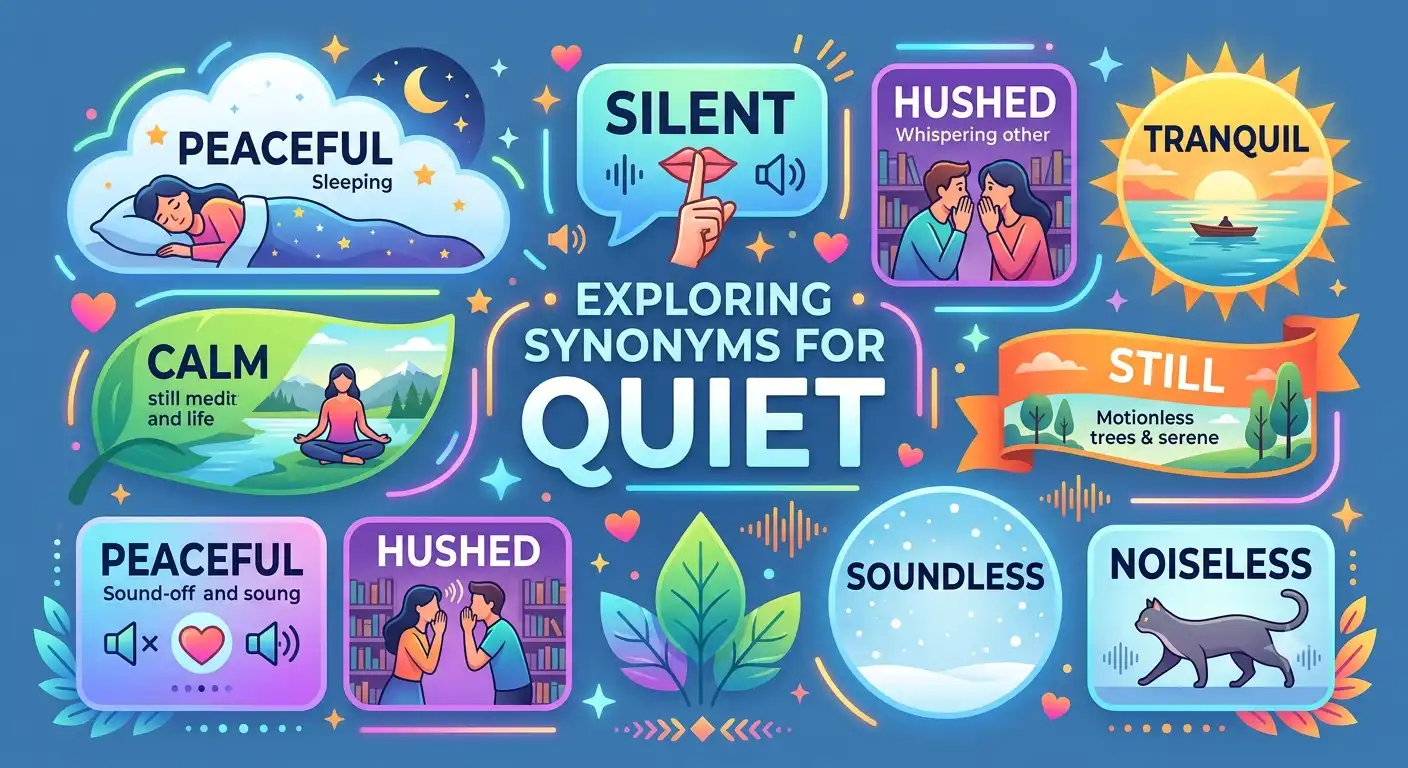
Synonyms for quiet are alternative words and expressions used to describe silence, calm, and low sound levels. Finding the right synonyms for quiet helps you avoid repeating the same basic emotion or state term, keeping your writing expressive, precise, and powerful. Imagine writing an intense mystery scene or a peaceful nature description, but you keep using the exact same tired word whenever things settle down. It feels repetitive, flat, and unconvincing. Great writing thrives on sensory variety and clarity. When you discover different synonyms for quiet, your sentences instantly become more vivid, accurate, and emotionally captivating for your readers.
For example, instead of writing “The library was very quiet during the exam,” you can say, “The library was completely hushed during the exam.”
In very simple English, quiet means making very little sound or being peaceful and calm.
This word is useful for:
- Students writing expressive stories and descriptive essays.
- Bloggers crafting engaging atmospheric narratives.
- Content writers building compelling scene descriptions.
- Daily English users communicating their environment precisely.
“Silence is a source of great strength.” — Lao Tzu
“Better to remain silent and be thought a fool than to speak out and remove all doubt.” — Abraham Lincoln
Linguistic Profile of “Quiet”
- Connotative Meaning: Peacefulness, stillness, secrecy, modesty, and low volume.
- Etymology: Originates from Old French quiet, from Latin quietus (calm, resting), related to quies (rest).
- Pronunciation (US): /ˈkwaɪɪt/
- Pronunciation (UK): /ˈkwaɪət/
- Syllables: Two syllables total (qui-et).
- Affixation Pattern: Root adjective form (derived from Latin roots with adjectival quality).
Comparison Table
| Keyword | Meaning | Usage Type | Context |
|---|---|---|---|
| Quiet | Making little sound | Casual / Standard | Everyday speech and general writing |
| Silent | Making no sound at all | Expressive / Absolute | Dramatic fiction and strict rules |
| Hushed | Made quiet or subdued | Literary / Atmospheric | Storytelling and tense moments |
| Muted | Softened in tone or color | Professional / Technical | Media, design, and ambient sounds |
| Tranquil | Free from disturbance or calm | Descriptive / Literary | Nature writing and peaceful settings |
| Peaceful | Free from noise or anxiety | Standard / Emotional | Personal relationships and environments |
1. Silent
Pronunciation (US & UK): /ˈsaɪlənt/ (US), /ˈsaɪlənt/ (UK) Meaning: It means making absolutely no sound at all. Examples:
- The old house remained silent all night long.
- She stayed silent when asked the tough question.
2. Hushed
Pronunciation (US & UK): /hʌʃt/ (US & UK) Meaning: It means spoken or made very soft and quiet. Examples:
- The teacher used a hushed voice in the library.
- A hushed crowd waited for the show to begin.
3. Muted
Pronunciation (US & UK): /ˈmjuːtɪd/ (US & UK) Meaning: It means softened or muffled in sound quality. Examples:
- We heard muted music coming from next door.
- His laughter was muted by the heavy pillow.
4. Still
Pronunciation (US & UK): /stɪl/ (US & UK) Meaning: It means not moving and completely quiet. Examples:
- The lake water was perfectly still at dawn.
- Please stay still while I take your photo.
5. Calm
Pronunciation (US & UK): /kɑːm/ (US), /kɑːm/ (UK) Meaning: It means peaceful and free from wild noise. Examples:
- The ocean breeze brought a calm mood to us.
- She took a deep breath to stay calm.
6. Peaceful
Pronunciation (US & UK): /ˈpiːsfəl/ (US & UK) Meaning: It means quiet and free from stress or war. Examples:
- We spent a peaceful afternoon reading books.
- The mountain valley is a very peaceful place.
7. Tranquil
Pronunciation (US & UK): /ˈtræŋkwɪl/ (US & UK) Meaning: It means free from disturbance and very serene. Examples:
- The garden looked tranquil in the morning light.
- He enjoys walking down tranquil forest paths.
8. Serene
Pronunciation (US & UK): /səˈriːn/ (US & UK) Meaning: It means calm, peaceful, and untroubled. Examples:
- Her face had a serene expression during yoga.
- The lake had a serene surface under the sun.
9. Placid
Pronunciation (US & UK): /ˈplæsɪd/ (US & UK) Meaning: It means not easily upset or remarkably calm. Examples:
- The placid river flowed slowly past the trees.
- He kept a placid demeanor during the debate.
10. Untroubled
Pronunciation (US & UK): /ʌnˈtrʌbəld/ (US & UK) Meaning: It means free from worry or loud disturbance. Examples:
- She slept an untroubled sleep until morning.
- His mind was untroubled by minor details.
11. Immobile
Pronunciation (US & UK): /ɪˈmoʊbəl/ (US & UK) Meaning: It means not moving at all in total silence. Examples:
- The statue stood immobile in the town square.
- He sat immobile while watching the bird.
12. Motionless
Pronunciation (US & UK): /ˈmoʊʃənləs/ (US & UK) Meaning: It means staying completely still and quiet. Examples:
- The cat stayed motionless before catching a mouse.
- The air was motionless on the hot summer day.
13. Dead
Pronunciation (US & UK): /dɛd/ (US & UK) Meaning: It means completely lacking sound or activity. Examples:
- The city streets were dead at midnight.
- The phone battery went dead during the call.
14. Soundless
Pronunciation (US & UK): /ˈsaʊndləs/ (US & UK) Meaning: It means making no sound whatsoever. Examples:
- The snow fell in soundless white flakes.
- A soundless shadow crossed the dark room.
15. Noiseless
Pronunciation (US & UK): /ˈnɔɪsləs/ (US & UK) Meaning: It means moving without making any noise. Examples:
- The modern electric car is nearly noiseless.
- She made a noiseless entry into the hall.
16. Wordless
Pronunciation (US & UK): /ˈwɜːrdləs/ (US & UK) Meaning: It means being silent without speaking words. Examples:
- They shared a wordless understanding of the plan.
- He gave a wordless nod of agreement.
17. Speechless
Pronunciation (US & UK): /ˈspiːtʃləs/ (US & UK) Meaning: It means unable to speak from surprise or awe. Examples:
- She was speechless when she won the prize.
- The stunning view left us entirely speechless.
18. Reticent
Pronunciation (US & UK): /ˈrɛtɪsənt/ (US & UK) Meaning: It means keeping silent or slow to reveal thoughts. Examples:
- He is famously reticent about his private life.
- The new student was quiet and reticent.
19. Reserved
Pronunciation (US & UK): /rɪˈzɜːrvd/ (US & UK) Meaning: It means slow to express feelings or speak out. Examples:
- She has a quiet and reserved personality.
- He remained reserved during the group meeting.
20. Taciturn
Pronunciation (US & UK): /ˈtæsɪtɜːrn/ (US & UK) Meaning: It means saying very little by nature. Examples:
- The old farmer was a taciturn man of few words.
- His taciturn reply surprised his chatty friends.
21. Untalkative
Pronunciation (US & UK): /ʌnˈtɔːkətɪv/ (US & UK) Meaning: It means not inclined to engage in talking. Examples:
- He was untalkative throughout the long car ride.
- She remained untalkative during dinner.
22. Closemouthed
Pronunciation (US & UK): /ˈkloʊsˌmaʊðd/ (US & UK) Meaning: It means keeping secrets and speaking very little. Examples:
- He stayed closemouthed about the surprise party.
- She is closemouthed when asked about work.
23. Mute
Pronunciation (US & UK): /mjuːt/ (US & UK) Meaning: It means refusing to speak or unable to make sound. Examples:
- The television was set to mute during ads.
- He stood mute in front of the judge.
24. Low
Pronunciation (US & UK): /loʊ/ (US & UK) Meaning: It means small in volume or gentle in tone. Examples:
- They spoke in low tones so nobody else heard.
- The radio volume was set to low.
25. Soft
Pronunciation (US & UK): /sɔːft/ (US & UK) Meaning: It means pleasant to the ear and not loud. Examples:
- Soft music played in the background café.
- She whispered a soft greeting to her friend.
26. Subdued
Pronunciation (US & UK): /səbˈduːd/ (US & UK) Meaning: It means quiet, low-key, or restrained in tone. Examples:
- The team had a subdued reaction to the loss.
- The room had subdued lighting for the movie.
27. Low-pitched
Pronunciation (US & UK): /ˈloʊ pɪtʃt/ (US & UK) Meaning: It means having a deep and soft sound quality. Examples:
- He heard a low-pitched hum from the engine.
- Her voice had a low-pitched, calming tone.
28. Faint
Pronunciation (US & UK): /feɪnt/ (US & UK) Meaning: It means barely heard or hard to notice. Examples:
- We heard a faint sound of music far away.
- There was a faint light in the distance.
29. Whispering
Pronunciation (US & UK): /ˈwɪspərɪŋ/ (US & UK) Meaning: It means speaking very softly using breath. Examples:
- The wind was whispering through pine trees.
- Students were whispering secrets in class.
30. Murmuring
Pronunciation (US & UK): /ˈmɜːrmərɪŋ/ (US & UK) Meaning: It means making a low, continuous quiet sound. Examples:
- A murmuring brook ran behind the cabin.
- We heard murmuring voices down the hall.
31. Low-keyed
Pronunciation (US & UK): /ˈloʊ kiːd/ (US & UK) Meaning: It means kept quiet, modest, or understated. Examples:
- They planned a low-keyed birthday party at home.
- His reaction to the news was very low-keyed.
32. Understated
Pronunciation (US & UK): /ˌʌndərˈsteɪtɪd/ (US & UK) Meaning: It means presented with quiet elegance. Examples:
- Her elegant dress had an understated charm.
- The review was understated yet very effective.
33. Muffled
Pronunciation (US & UK): /ˈmʌfəld/ (US & UK) Meaning: It means wrapped or blocked to reduce sound. Examples:
- We heard muffled footsteps above our ceiling.
- The thick snow muffled all traffic noises.
34. Stifled
Pronunciation (US & UK): /ˈstaɪfəld/ (US & UK) Meaning: It means restrained or held back from expression. Examples:
- She stifled a laugh during the serious lecture.
- He felt a stifled frustration inside him.
35. Smothered
Pronunciation (US & UK): /ˈsmʌðərd/ (US & UK) Meaning: It means suffocated or kept very quiet. Examples:
- The cry was smothered by the heavy blanket.
- He smothered a yawn during the long meeting.
36. Suppressed
Pronunciation (US & UK): /səˈprɛst/ (US & UK) Meaning: It means kept hidden or forced down. Examples:
- She suppressed a smile when he tripped.
- The news was suppressed by local authorities.
37. Restrained
Pronunciation (US & UK): /rɪˈstreɪnd/ (US & UK) Meaning: It means kept under control without excess. Examples:
- His style of acting was wonderfully restrained.
- She gave a restrained wave as they left.
38. Controlled
Pronunciation (US & UK): /kənˈtroʊld/ (US & UK) Meaning: It means managed with calm discipline. Examples:
- He kept a controlled voice despite his anger.
- The vehicle made a controlled stop at the light.
39. Soothing
Pronunciation (US & UK): /ˈsuːðɪŋ/ (US & UK) Meaning: It means making someone feel calm and quiet. Examples:
- The soothing rain helped the baby fall asleep.
- She listened to soothing guitar melodies.
40. Lulling
Pronunciation (US & UK): /ˈlʌlɪŋ/ (US & UK) Meaning: It means causing someone to feel calm or sleepy. Examples:
- The lulling sound of waves put him to sleep.
- A lulling rhythm echoed through the room.
41. Stilled
Pronunciation (US & UK): /stɪld/ (US & UK) Meaning: It means made quiet or stopped from moving. Examples:
- The sudden music stilled the noisy room.
- Her gentle words stilled his anxious thoughts.
42. Uncommunicative
Pronunciation (US & UK): /ˌʌnkəˈmjuːnɪkətɪv/ (US & UK) Meaning: It means unwilling to speak or share details. Examples:
- The suspect remained uncommunicative with police.
- He was uncommunicative after a hard day.
43. Aloof
Pronunciation (US & UK): /əˈluːf/ (US & UK) Meaning: It means coolly detached and keeping apart. Examples:
- She kept an aloof and quiet distance from others.
- The cat remained aloof on the high shelf.
44. Detached
Pronunciation (US & UK): /dɪˈtætʃt/ (US & UK) Meaning: It means separated or emotionally distant. Examples:
- He looked at the problem with detached calm.
- Her response felt cool and detached.
45. Remote
Pronunciation (US & UK): /rɪˈmoʊt/ (US & UK) Meaning: It means distant in space or quiet in manner. Examples:
- They lived in a remote and silent valley.
- He seemed remote during the family dinner.
46. Withdrawn
Pronunciation (US & UK): /wɪðˈdrɔːn/ (US & UK) Meaning: It means shy, quiet, and keeping to oneself. Examples:
- The child was withdrawn after changing schools.
- He grew quiet and withdrawn over the winter.
47. Introverted
Pronunciation (US & UK): /ˈɪntrəvɜːrtɪd/ (US & UK) Meaning: It means focused on inner thoughts rather than talk. Examples:
- She is a quiet, introverted writer who loves books.
- Introverted people often enjoy peaceful moments.
48. Private
Pronunciation (US & UK): /ˈpraɪvɪt/ (US & UK) Meaning: It means kept hidden or suited for quiet isolation. Examples:
- They had a private chat in the corner office.
- The garden provided a private, quiet retreat.
49. Unobtrusive
Pronunciation (US & UK): /ˌʌnəbˈtruːsɪv/ (US & UK) Meaning: It means not catching attention or staying quiet. Examples:
- The waiter provided unobtrusive service all night.
- She wore an unobtrusive gray jacket.
50. Undemonstrative
Pronunciation (US & UK): /ˌʌndɪˈmɑːnstrətɪv/ (US & UK) Meaning: It means not showing feelings openly or loudly. Examples:
- His family was undemonstrative with their affection.
- She gave an undemonstrative nod of approval.
Antonyms of “Quiet”
Because “quiet” describes silence, calm, and low volume, its direct opposites point to noise, activity, and loud expression. Direct antonyms include:
- Loud
- Noisy
- Boisterous
- Clamorous
- Deafening
Prototype Meaning and Categorization
As an abstract descriptive adjective, quiet belongs to the functional category of sensory and psychological state modifiers. Its prototypical function is to characterize low acoustic volume, absence of commotion, or inner peace, making human environments and personal temperaments clear in communication.
Frequently Asked Questions
What does “quiet” mean?
“Quiet” means making very little sound or being peaceful, calm, and free from loud disturbance.
Is “quiet” formal or informal?
It is standard vocabulary. You can use it comfortably in everyday speech, storytelling, academic writing, and professional communication.
Can I use “quiet” as a noun or a verb?
Yes, “quiet” can function as a noun meaning silence (e.g., “enjoying the quiet”) or a verb meaning to make something silent (e.g., “to quiet the crowd”).
How do I avoid repeating “quiet” too often?
You can swap it out with alternative terms from our list, such as “silent,” “hushed,” “tranquil,” or “subdued,” depending on the exact context.
What is the best alternative for intense creative writing?
In creative stories, words like “hushed,” “silent,” or “serene” add atmospheric depth and strong sensory impact to your character descriptions.
Conclusion
Mastering vocabulary and expanding your collection of synonyms for quiet transforms your writing from average to exceptional. When you deliberately choose varied descriptors, your sentences flow smoothly, hold reader interest, and project confidence. Learning synonyms improves writing by banishing repetition, enhances blogging by keeping audience engagement high, elevates speaking by adding natural rhythm, and sharpens overall communication.
Try practicing these words today in your daily emails, school essays, and conversations with friends. Small changes to your everyday vocabulary make a massive difference in how people understand and enjoy your message. Keep experimenting with language, stay curious, and watch your writing skills grow stronger every single day!
“Silence is golden when you can’t think of a good answer.” — Muhammad Ali
“In the silence of the heart, God speaks.” — Mother Teresa
“Talk less, smile more.” — Lin-Manuel Miranda

Andrew Collins is an academic English educator with over 12 years of experience helping university students, IELTS candidates, and ESL learners improve their writing vocabulary.