Introduction
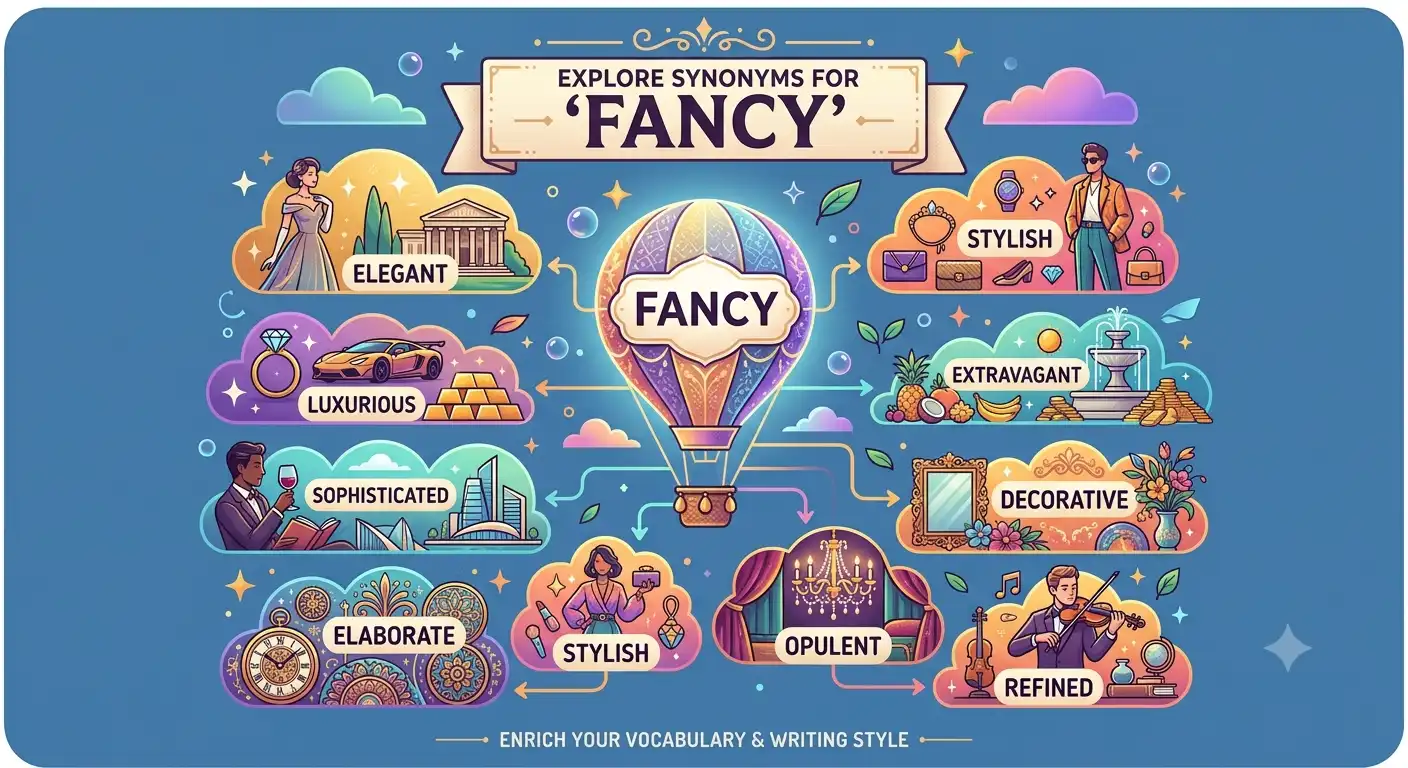
Synonyms for fancy are alternative words and phrases used to describe things that are elaborate, decorative, or high-class. Finding the right synonyms for fancy helps you avoid repeating the same basic adjective, keeping your writing expressive and precise. Imagine walking into a newly decorated dining room. You want to describe the gorgeous decorations to a friend, but you find yourself using the same tired word over and over again. It feels repetitive, flat, and uninspired. Great writing thrives on sensory variety and vocabulary choices. When you discover different synonyms for fancy, your sentences instantly become more vivid, accurate, and emotionally captivating for your readers.
For example, instead of writing “She wore a very fancy dress to the party,” you can say, “She wore an elegant dress to the party.”
In very simple English, fancy means decorative, special, or expensive.
This word is useful for:
- Students writing descriptive stories and narrative essays.
- Bloggers crafting engaging lifestyle and fashion posts.
- Content writers building compelling product descriptions.
- Daily English users communicating their tastes precisely.
“Elegance is refusal.” — Coco Chanel
“Style is a way to say who you are without having to speak.” — Rachel Zoe
Linguistic Profile of “Fancy”
- Connotative Meaning: Elegance, luxury, decoration, imagination, and high quality.
- Etymology: Shortened form of Middle English fantasie, derived from Old French phantasie, from Latin phantasia, from Greek phantasia (appearance, imagination).
- Pronunciation (US): /ˈfænsi/
- Pronunciation (UK): /ˈfænsi/
- Syllables: Two syllables total (fan-cy).
- Affixation Pattern: Root adjective/noun form (derived from Latin/Greek roots with adjectival suffix).
Comparison Table
| Keyword | Meaning | Usage Type | Context |
|---|---|---|---|
| Fancy | Elaborate or decorative | Casual / Standard | Everyday speech and general writing |
| Elegant | Graceful and stylish | Formal / Literary | Fashion, design, and formal writing |
| Luxurious | Extremely comfortable or expensive | Professional / Commercial | High-end products and hotels |
| Ornate | Heavily decorated with complex patterns | Literary / Architectural | Art, buildings, and historical descriptions |
| Elaborate | Made with great detail | Standard / Descriptive | Detailed plans and complex designs |
| Grand | Magnificent and large in scale | Expressive / Formal | Architecture, events, and statements |
1. Elegant
Pronunciation (US & UK): /ˈɛlɪɡənt/ (US & UK) Meaning: It means stylish, graceful, and pleasing in appearance. Examples:
- She wore an elegant silver necklace to the dinner.
- The living room had elegant wooden furniture.
2. Luxurious
Pronunciation (US & UK): /lʌɡˈʒʊriəs/ (US), /lʌɡˈʒʊərɪəs/ (UK) Meaning: It means extremely comfortable, rich, and high quality. Examples:
- They stayed at a luxurious hotel near the beach.
- The car seats were covered in luxurious soft leather.
3. Elaborate
Pronunciation (US & UK): /ɪˈlæbərət/ (US), /ɪˈlæbərɪt/ (UK) Meaning: It means made with great detail and careful planning. Examples:
- She baked an elaborate cake for the wedding.
- The team made elaborate plans for the big event.
4. Ornate
Pronunciation (US & UK): /ɔːrˈneɪt/ (US & UK) Meaning: It means heavily decorated with complex designs. Examples:
- The old palace had ornate golden mirrors on the walls.
- He bought an ornate carpet with bright floral patterns.
5. Grand
Pronunciation (US & UK): /ɡrænd/ (US & UK) Meaning: It means magnificent, large, and impressive in scale. Examples:
- They walked into a grand ballroom filled with light.
- The hotel featured a grand staircase at the entrance.
6. Stylish
Pronunciation (US & UK): /ˈstaɪlɪʃ/ (US & UK) Meaning: It means fashionable and pleasing to modern tastes. Examples:
- He wore a stylish blue jacket to work today.
- The café has stylish chairs and modern lighting.
7. Chic
Pronunciation (US & UK): /ʃiːk/ (US & UK) Meaning: It means elegantly and fashionably modern. Examples:
- She loves shopping at chic clothing boutiques downtown.
- The apartment has a chic urban design style.
8. Swank
Pronunciation (US & UK): /swæŋk/ (US & UK) Meaning: It means stylishly luxurious and impressive. Examples:
- They dined at a swank restaurant in the city center.
- He drove a swank sports car down the avenue.
9. Swanky
Pronunciation (US & UK): /ˈswæŋki/ (US & UK) Meaning: It means expensive and showy in a stylish way. Examples:
- The couple booked a swanky suite for their holiday.
- She wore swanky boots to the winter party.
10. Posh
Pronunciation (US & UK): /pɑːʃ/ (US), /pɒʃ/ (UK) Meaning: It means elegant, luxurious, and upper-class. Examples:
- They moved to a posh neighborhood near the park.
- We enjoyed afternoon tea at a posh hotel lounge.
11. High-end
Pronunciation (US & UK): /ˈhaɪ ɛnd/ (US & UK) Meaning: It means expensive and of the best quality. Examples:
- She bought her laptop at a high-end electronics store.
- The street is lined with high-end fashion shops.
12. Deluxe
Pronunciation (US & UK): /dɪˈlʌks/ (US & UK) Meaning: It means superior in quality and luxury. Examples:
- They upgraded to a deluxe room with an ocean view.
- The pizza came with deluxe toppings and extra cheese.
13. Premium
Pronunciation (US & UK): /ˈpriːmiəm/ (US & UK) Meaning: It means of higher than average grade or quality. Examples:
- The coffee shop uses premium roasted coffee beans.
- He paid extra for premium seating at the concert.
14. Exclusive
Pronunciation (US & UK): /ɪkˈskluːsɪv/ (US & UK) Meaning: It means available only to special people or groups. Examples:
- They joined an exclusive club for book lovers.
- The brand sells exclusive clothes in limited numbers.
15. Choice
Pronunciation (US & UK): /tʃɔɪs/ (US & UK) Meaning: It means of very good quality and carefully selected. Examples:
- The butcher sold choice cuts of fresh beef.
- We picked choice apples from the orchard tree.
16. Select
Pronunciation (US & UK): /sɪˈlɛkt/ (US & UK) Meaning: It means chosen carefully as the very best. Examples:
- A select group of students won the science prize.
- The store offers select wines from local vineyards.
17. Prime
Pronunciation (US & UK): /praɪm/ (US & UK) Meaning: It means of the best possible quality or value. Examples:
- They secured prime real estate downtown.
- The runner was in prime physical condition.
18. Superior
Pronunciation (US & UK): /suːˈpɪriər/ (US), /suːˈpɪərɪə/ (UK) Meaning: It means better than average or exceptionally good. Examples:
- This brand offers superior sound quality in headphones.
- Her painting skills were superior to the others.
19. First-class
Pronunciation (US & UK): /ˈfɜːrst klæs/ (US), /ˈfɜːst klɑːs/ (UK) Meaning: It means of the highest quality or top tier. Examples:
- Passengers enjoyed first-class service on the flight.
- The school provides a first-class education program.
20. Top-notch
Pronunciation (US & UK): /ˌtɑːp ˈnɑːtʃ/ (US), /ˌtɒp ˈnɒtʃ/ (UK) Meaning: It means of the highest quality and excellence. Examples:
- The restaurant is known for top-notch customer service.
- He used top-notch tools to fix the wooden chair.
21. Splendid
Pronunciation (US & UK): /ˈsplɛndɪd/ (US & UK) Meaning: It means magnificent, very impressive, or beautiful. Examples:
- We had a splendid view of the mountains at sunrise.
- She wore a splendid red coat in the snow.
22. Magnificent
Pronunciation (US & UK): /mæɡˈnɪfɪsənt/ (US & UK) Meaning: It means extremely beautiful, elaborate, or striking. Examples:
- The old castle had a magnificent stone gate.
- They watched a magnificent fireworks show at night.
23. Gorgeous
Pronunciation (US & UK): /ˈɡɔːrdʒəs/ (US), /ˈɡɔːdʒəs/ (UK) Meaning: It means very beautiful, attractive, or appealing. Examples:
- She wore a gorgeous yellow dress to the dance.
- The garden was filled with gorgeous blooming flowers.
24. Stunning
Pronunciation (US & UK): /ˈstʌnɪŋ/ (US & UK) Meaning: It means extremely impressive or strikingly attractive. Examples:
- The bride looked stunning in her white gown.
- We saw a stunning sunset over the ocean water.
25. Dazzling
Pronunciation (US & UK): /ˈdæzəlɪŋ/ (US & UK) Meaning: It means extremely bright, beautiful, or skillful. Examples:
- She wore dazzling diamond earrings to the gala.
- The skater performed a dazzling routine on ice.
26. Radiant
Pronunciation (US & UK): /ˈreɪdiənt/ (US), /ˈreɪdɪənt/ (UK) Meaning: It means shining brightly or filled with happiness. Examples:
- The bride looked radiant under the wedding lights.
- A radiant smile lit up her face when she won.
27. Striking
Pronunciation (US & UK): /ˈstraɪkɪŋ/ (US & UK) Meaning: It means attracting attention by being very impressive. Examples:
- The painting featured striking blue and gold colors.
- He had striking green eyes that caught your gaze.
28. Impressive
Pronunciation (US & UK): /ɪmˈprɛsɪv/ (US & UK) Meaning: It means evoking admiration through great quality. Examples:
- The young pianist gave an impressive performance.
- Their new house is large and very impressive.
29. Exquisite
Pronunciation (US & UK): /ˈɛkskwɪzɪt/ (US & UK) Meaning: It means extremely beautiful and delicately crafted. Examples:
- The museum displayed exquisite antique jewelry.
- She made an exquisite porcelain vase by hand.
30. Delicate
Pronunciation (US & UK): /ˈdɛlɪkət/ (US & UK) Meaning: It means fine in quality, structure, or texture. Examples:
- The cake was decorated with delicate sugar flowers.
- She wore a delicate gold chain around her neck.
31. Refined
Pronunciation (US & UK): /rɪˈfaɪnd/ (US & UK) Meaning: It means elegant, cultured, and free from crudeness. Examples:
- He has very refined tastes in classical music.
- The restaurant serves refined French cuisine.
32. Cultured
Pronunciation (US & UK): /ˈkʌltʃərd/ (US), /ˈkʌltʃəd/ (UK) Meaning: It means characterized by good taste and education. Examples:
- She is a cultured person who loves visiting art galleries.
- The host gave a cultured speech at the opening night.
33. Polished
Pronunciation (US & UK): /ˈpɑːlɪʃt/ (US), /ˈpɒlɪʃt/ (UK) Meaning: It means refined, expert, and without rough edges. Examples:
- He delivered a polished presentation to the board.
- The wooden floor was smooth and polished shiny.
34. Artful
Pronunciation (US & UK): /ˈɑːrtfəl/ (US), /ˈɑːtfəl/ (UK) Meaning: It means done with skill, cleverness, or style. Examples:
- The room featured artful arrangements of dried flowers.
- She told an artful story that kept everyone hooked.
35. Deft
Pronunciation (US & UK): /dɛft/ (US & UK) Meaning: It means neatly skillful and quick in movement. Examples:
- With deft fingers, she tied the ribbon into a bow.
- The chef made deft cuts with the sharp knife.
36. Ostentatious
Pronunciation (US & UK): /ˌɑːstɛnˈteɪʃəs/ (US), /ˌɒstɛnˈteɪʃəs/ (UK) Meaning: It means designed to impress or draw notice loudly. Examples:
- He drove an ostentatious red sports car to work.
- The hall was filled with ostentatious golden statues.
37. Showy
Pronunciation (US & UK): /ˈshoʊi/ (US & UK) Meaning: It means brightly colored or overly decorated to impress. Examples:
- She wore a showy hat with bright pink feathers.
- The garden had showy flowers that stood out.
38. Flashy
Pronunciation (US & UK): /ˈflæʃi/ (US & UK) Meaning: It means looking too bright, expensive, or showy. Examples:
- He wore a flashy gold watch on his wrist.
- The singer arrived in a flashy limousine.
39. Flamboyant
Pronunciation (US & UK): /flæmˈbɔɪənt/ (US & UK) Meaning: It means tending to attract attention because of exuberance. Examples:
- The artist wore a flamboyant purple jacket.
- The stage design was bright and flamboyant.
40. Garish
Pronunciation (US & UK): /ˈɡɛrɪʃ/ (US & UK) Meaning: It means unpleasantly bright or overly decorated. Examples:
- The room was painted in garish neon colors.
- She disliked his garish yellow suit jacket.
41. Tawdry
Pronunciation (US & UK): /ˈtɔːdri/ (US & UK) Meaning: It means cheap and showy in appearance or quality. Examples:
- The store sold tawdry plastic decorations.
- He thought the sparkling ring looked a bit tawdry.
42. Baroque
Pronunciation (US & UK): /bəˈroʊk/ (US & UK) Meaning: It means highly ornate and detailed in style. Examples:
- The church featured baroque architecture from the past.
- She listened to baroque violin music in the study.
43. Rococo
Pronunciation (US & UK): /rəˈkoʊkoʊ/ (US & UK) Meaning: It means characterized by an elaborately ornate style. Examples:
- The salon was decorated in a delicate rococo style.
- He studied rococo art history in college.
44. Fancy-free
Pronunciation (US & UK): /ˈfænsi friː/ (US & UK) Meaning: It means free from worries or romantic commitments. Examples:
- He traveled the world young and fancy-free.
- She enjoyed a carefree and fancy-free summer.
45. Imaginative
Pronunciation (US & UK): /ɪˈmædʒɪnətɪv/ (US & UK) Meaning: It means having or showing creative new ideas. Examples:
- The author wrote an imaginative children’s book.
- She made imaginative decorations out of recycled paper.
46. Inventive
Pronunciation (US & UK): /ɪnˈvɛntɪv/ (US & UK) Meaning: It means having the skill to create new things. Examples:
- He found inventive ways to save money at home.
- The chef created an inventive menu for guests.
47. Visionary
Pronunciation (US & UK): /ˈvɪʒənɛri/ (US), /ˈvɪʒənəri/ (UK) Meaning: It means thinking about the future with imagination. Examples:
- The architect presented a visionary city design.
- She was a visionary leader in technology fields.
48. Fanciful
Pronunciation (US & UK): /ˈfænsɪfəl/ (US & UK) Meaning: It means overimaginative and unreal or whimsical. Examples:
- The story was filled with fanciful magical creatures.
- She wore a fanciful hat shaped like a flower.
49. Whimsical
Pronunciation (US & UK): /ˈwɪmzɪkəl/ (US & UK) Meaning: It means playfully quaint or fanciful in design. Examples:
- The nursery had whimsical animal wall paintings.
- He told a whimsical tale about a flying dog.
50. Capricious
Pronunciation (US & UK): /kəˈprɪʃəs/ (US & UK) Meaning: It means sudden changes of mood or behavior. Examples:
- The weather in spring can be quite capricious.
- She had a capricious habit of changing plans.
Antonyms of “Fancy”
Because “fancy” describes things that are elaborate, decorative, or high-class, its direct opposites point to simplicity, plainness, and ordinary quality. Direct antonyms include:
- Plain
- Simple
- Ordinary
- Unadorned
- Basic
Prototype Meaning and Categorization
As an expressive qualitative adjective, fancy belongs to the functional category of aesthetic and status descriptors. Its prototypical function is to characterize items, events, or environments that exceed ordinary standards of decoration, cost, or style, making human expression vivid and detailed.
Frequently Asked Questions
What does “fancy” mean?
“Fancy” means ornate, decorative, special, or higher in cost and quality than ordinary items.
Is “fancy” formal or informal?
It is casual and standard. While fine for everyday speech and informal writing, more formal writing often prefers words like “elegant” or “luxurious.”
Can I use “fancy” as a verb or a noun?
Yes, “fancy” can function as a verb meaning to imagine or desire something (e.g., “Do you fancy a cup of tea?”), or as a noun meaning an inclination or liking.
How do I avoid repeating “fancy” too often?
You can swap it out with alternative terms from our list, such as “elegant,” “stylish,” “luxurious,” or “elaborate,” depending on your specific context.
What is the best alternative for academic or professional writing?
In professional or formal contexts, words like “refined,” “luxurious,” or “sophisticated” help maintain a polished and articulate tone.
Conclusion
Mastering vocabulary and expanding your collection of synonyms for fancy transforms your writing from average to exceptional. When you deliberately choose varied descriptors, your sentences flow smoothly, hold reader interest, and project confidence. Learning synonyms improves writing by banishing repetition, enhances blogging by keeping audience engagement high, elevates speaking by adding natural rhythm, and sharpens overall communication.
Try practicing these words today in your daily emails, school essays, and conversations with friends. Small changes to your everyday vocabulary make a massive difference in how people understand and enjoy your message. Keep experimenting with language, stay curious, and watch your writing skills grow stronger every single day!
“Simplicity is the ultimate sophistication.” — Leonardo da Vinci
“Architecture is frozen music.” — Johann Wolfgang von Goethe

Andrew Collins is an academic English educator with over 12 years of experience helping university students, IELTS candidates, and ESL learners improve their writing vocabulary.