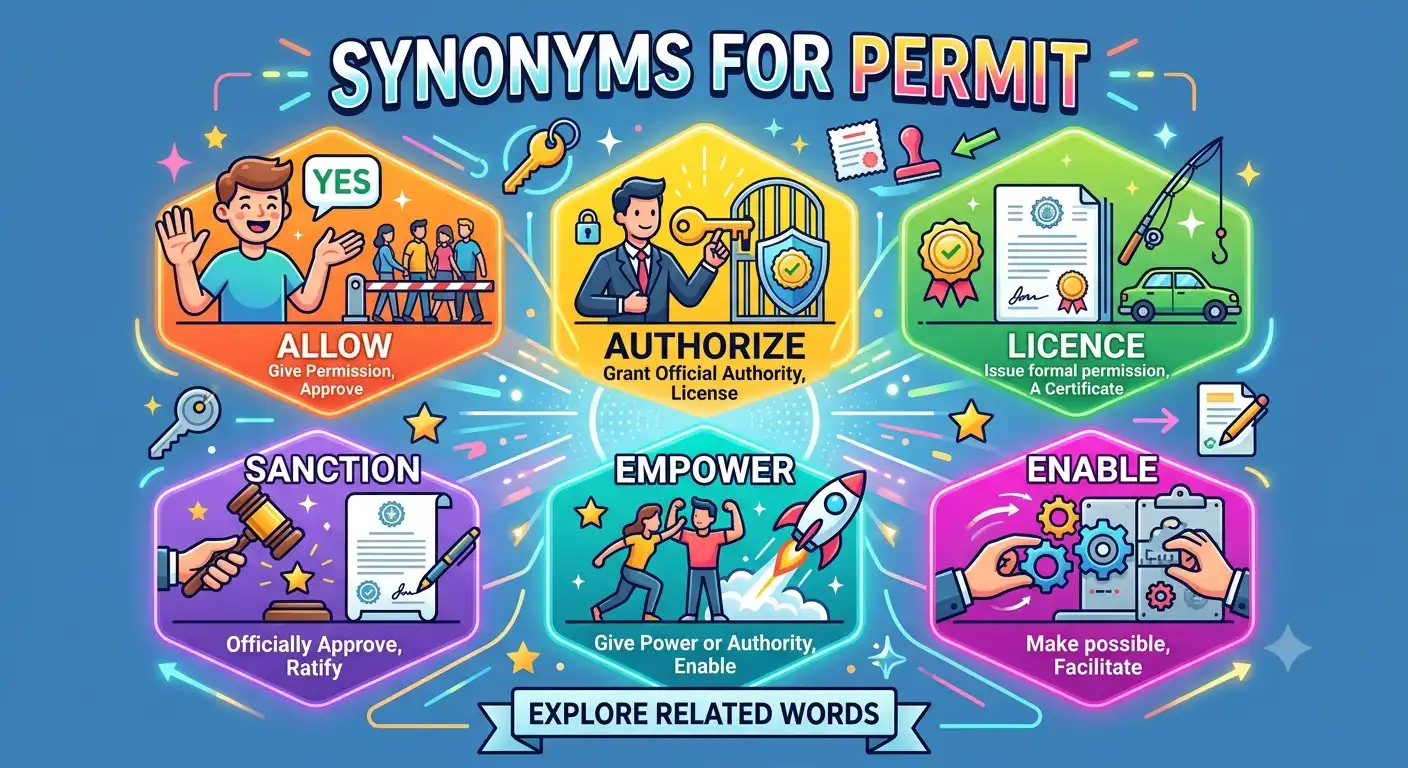
Learning effective synonyms for permit helps you express approval and authority with clarity and confidence. The word permit means to allow something to happen or to give official permission. When you use varied synonyms for permit, you instantly expand your vocabulary and make your writing more precise.
Imagine drafting an important business proposal or a school essay and needing to explain that an activity is allowed. Repeating the word permit constantly can make your text feel flat and repetitive. Imagine a city council issuing a park event pass; saying they “allow,” “authorize,” or “grant” entry changes the tone from a simple rule to an official approval.
In simple terms, to permit means to let someone do something or to give them an official pass. This word is immensely useful for students aiming for top marks on essays, bloggers creating persuasive content, content writers building authority, and daily English speakers sharing clear ideas. Using rich synonyms for permit keeps your writing fresh and engaging.
“Words are, in my not-so-humble opinion, our most inexhaustible source of magic.” — J.K. Rowling
“The limit of my language means the limits of my world.” — Ludwig Wittgenstein
Linguistic Breakdown of Permit
Connotative Meaning
The word permit carries an authoritative, legalistic, and formal connotation. It implies legal or official sanction, structural order, and clear approval.
Etymology
- Latin Root: Derived from the Latin permittere, combining per- (through) and mittere (to send or let go).
- Anglo-Norman: Entered Anglo-Norman French as permettre.
- Late Middle English: Adapted into Middle English in the 15th century as both a verb (“to grant leave”) and later as a noun (“an official document”).
Pronunciation
- Verb IPA (US): /pɚˈmɪt/ | UK: /pəˈmɪt/
- Noun IPA (US): /ˈpɝː.mɪt/ | UK: /ˈpɜː.mɪt/
Syllables & Affixation
- Syllables: 2 (per-mit)
- Prefix: per- (meaning “through” or “completely”)
- Root: mit (meaning “to send” or “to let go”)
Comparison Table of Key Synonyms
| Keyword | Meaning | Usage Type | Context |
|---|---|---|---|
| Permit | Give permission or official entry | Formal / Official | Legal, administrative, official rules |
| Allow | Let someone do something | Neutral / Common | Everyday conversation, home rules |
| Authorize | Give official power or approval | Formal / Professional | Workplace, government, security |
| Grant | Give something formally as a right | Formal / Polite | Academic, legal, official requests |
| License | Give legal permission by document | Technical / Formal | Business, driving, trade regulations |
| Sanction | Give official approval or consent | Formal / Authoritative | International affairs, official bodies |
| Approve | Agree to or accept officially | Professional / Neutral | Office work, project planning |
| Enable | Make it possible for someone to act | Functional / Helpful | Technology, education, coaching |
Main Content – 50 Synonyms for Permit
“Proper words in proper places, make the true definition of a style.” — Jonathan Swift
1. Allow
- Pronunciation: US: /əˈlaʊ/ | UK: /əˈlaʊ/
- Meaning: To let someone do something without stopping them.
- Examples:
- My parents allow me to stay up late on weekends.
- The school does not allow phones in the classroom.
2. Authorize
- Pronunciation: US: /ˈɑː.θɚ.aɪz/ | UK: /ˈɔː.θə.raɪz/
- Meaning: To give official power or permission to someone.
- Examples:
- The manager will authorize the refund today.
- Only trained staff can authorize entry to the lab.
3. Grant
- Pronunciation: US: /ɡrænt/ | UK: /ɡrɑːnt/
- Meaning: To agree to give someone what they asked for.
- Examples:
- The judge decided to grant them extra time.
- The committee will grant funds for the park project.
4. License
- Pronunciation: US: /ˈlaɪ.səns/ | UK: /ˈlaɪ.səns/
- Meaning: To give legal permission to do or own something.
- Examples:
- The city will license the new food truck tomorrow.
- State officers license drivers after a road test.
5. Sanction
- Pronunciation: US: /ˈsæŋk.ʃən/ | UK: /ˈsæŋk.ʃən/
- Meaning: To give official approval or support to an action.
- Examples:
- The principal did not sanction the outdoor event.
- The board voted to sanction the construction plan.
6. Approve
- Pronunciation: US: /əˈpruːv/ | UK: /əˈpruːv/
- Meaning: To agree to something or say it is good.
- Examples:
- The teacher will approve your topic choice.
- We hope the city council will approve our request.
7. Consent
- Pronunciation: US: /kənˈsent/ | UK: /kənˈsent/
- Meaning: To agree to let something happen.
- Examples:
- She gave her consent for the medical test.
- They need your consent to post the photo online.
8. Enable
- Pronunciation: US: /ɪˈneɪ.bəl/ | UK: /ɪˈneɪ.bəl/
- Meaning: To make it easy or possible for someone to act.
- Examples:
- The new tool will enable us to finish early.
- Good software enables fast online learning.
9. Clear
- Pronunciation: US: /klɪr/ | UK: /klɪə/
- Meaning: To give official approval after checking safety rules.
- Examples:
- The doctor will clear him to play sports again.
- Security needs to clear all guests at the gate.
10. Endorse
- Pronunciation: US: /ɪnˈdɔːrs/ | UK: /ɪnˈdɔːs/
- Meaning: To say publicly that you support an idea or plan.
- Examples:
- The mayor chose to endorse the new school policy.
- Doctors endorse eating fresh fruit every day.
11. Empower
- Pronunciation: US: /ɪmˈpaʊ.ɚ/ | UK: /ɪmˈpaʊ.ər/
- Meaning: To give someone the freedom or power to act.
- Examples:
- The leader wants to empower workers to make choices.
- Education can empower young people to succeed.
12. Charter
- Pronunciation: US: /ˈtʃɑːr.t̬ɚ/ | UK: /ˈtʃɑː.tər/
- Meaning: To grant official rights to start an organization.
- Examples:
- The state will charter a new public university.
- The group was formed under a local town charter.
13. Pass
- Pronunciation: US: /pæs/ | UK: /pɑːs/
- Meaning: To approve a law or rule by official vote.
- Examples:
- The government plans to pass a new safety law.
- Leaders pass regulations to keep water clean.
14. Warrant
- Pronunciation: US: /ˈwɔːr.ənt/ | UK: /ˈwɒr.ənt/
- Meaning: To justify or give a valid reason for an action.
- Examples:
- The tiny change does not warrant a full stop.
- His hard work warrants a promotion this month.
15. Admit
- Pronunciation: US: /ədˈmɪt/ | UK: /ədˈmɪt/
- Meaning: To allow someone to enter a place or group.
- Examples:
- The usher will admit guests at six o’clock.
- The museum will admit children for free today.
16. Indulge
- Pronunciation: US: /ɪnˈdʌldʒ/ | UK: /ɪnˈdʌldʒ/
- Meaning: To allow yourself or someone else to enjoy a treat.
- Examples:
- We like to indulge in sweet cake after dinner.
- Parents sometimes indulge their kids on birthdays.
17. Yield
- Pronunciation: US: /jiːld/ | UK: /jiːld/
- Meaning: To give up control and let others go first.
- Examples:
- Drivers must yield to pedestrians at the crosswalk.
- He decided to yield control of the project.
18. Concede
- Pronunciation: US: /kənˈsiːd/ | UK: /kənˈsiːd/
- Meaning: To allow or admit that something is true or fair.
- Examples:
- He had to concede that her point was right.
- The player conceded the game after the mistake.
19. Greenlight
- Pronunciation: US: /ˈɡriːn.laɪt/ | UK: /ˈɡriːn.laɪt/
- Meaning: To give permission for a project to start.
- Examples:
- Studio heads will greenlight the new film soon.
- The boss greenlit our team’s creative proposal.
20. Entitle
- Pronunciation: US: /ɪnˈtaɪ.t̬əl/ | UK: /ɪnˈtaɪ.təl/
- Meaning: To give someone a legal right to have something.
- Examples:
- This pass will entitle you to free parking.
- Membership entitles you to special store discounts.
21. Commission
- Pronunciation: US: /kəˈmɪʃ.ən/ | UK: /kəˈmɪʃ.ən/
- Meaning: To formally choose someone to complete a job.
- Examples:
- They will commission an artist to paint the wall.
- The city commissioned a study on local traffic.
22. Mandate
- Pronunciation: US: /ˈmæn.deɪt/ | UK: /ˈmæn.deɪt/
- Meaning: To give official authority to carry out a duty.
- Examples:
- The new rule mandates helmet safety for cyclists.
- Voters gave the council a mandate to build parks.
23. Accredit
- Pronunciation: US: /əˈkred.ɪt/ | UK: /əˈkred.ɪt/
- Meaning: To officially recognize that an institution meets standards.
- Examples:
- The board will accredit the new medical school.
- Always check if an online course is fully accredited.
24. Tolerate
- Pronunciation: US: /ˈtɑː.lə.reɪt/ | UK: /ˈtɒl.ər.eɪt/
- Meaning: To accept or allow behavior without fighting it.
- Examples:
- The teacher will not tolerate loud noise in class.
- We must tolerate different views in open debates.
25. Brook
- Pronunciation: US: /brʊk/ | UK: /brʊk/
- Meaning: To allow or stand for something unpleasant.
- Examples:
- The strict captain would brook no delay.
- The firm will brook no compromise on safety.
26. Bear
- Pronunciation: US: /ber/ | UK: /beər/
- Meaning: To accept or deal with a difficult situation.
- Examples:
- She cannot bear to see animals in distress.
- He had to bear the heavy burden alone.
27. Rubberstamp
- Pronunciation: US: /ˈrʌb.ɚ.stæmp/ | UK: /ˈrʌb.ə.stæmp/
- Meaning: To approve something quickly without careful thought.
- Examples:
- The board did not just rubberstamp the plan.
- Avoid rubberstamping documents without reading them first.
28. Vouchsafe
- Pronunciation: US: /vaʊtʃˈseɪf/ | UK: /vaʊtʃˈseɪf/
- Meaning: To grant or give something in a gracious manner.
- Examples:
- The king chose to vouchsafe an audience to them.
- She vouchsafed a brief smile to her audience.
29. Favor
- Pronunciation: US: /ˈfeɪ.vɚ/ | UK: /ˈfeɪ.vər/
- Meaning: To approve of or show special support to someone.
- Examples:
- Most voters favor the new park building project.
- Teachers do not favor one student over another.
30. Bless
- Pronunciation: US: /bles/ | UK: /bles/
- Meaning: To approve or give full support to a choice.
- Examples:
- Her family gave their blessing to the move.
- The community blessed the proposal to build a library.
31. Authorization
- Pronunciation: US: /ˌɑː.θɚ.əˈzeɪ.ʃən/ | UK: /ˌɔː.θər.aɪˈzeɪ.ʃən/
- Meaning: Official paper or permission that allows an action.
- Examples:
- You need written authorization to enter this zone.
- The bank sent authorization for the money payment.
32. Clearance
- Pronunciation: US: /ˈklɪr.əns/ | UK: /ˈklɪə.rəns/
- Meaning: Official permission to enter or move forward safely.
- Examples:
- The plane received clearance for immediate takeoff.
- Security gave us clearance to visit the main room.
33. Leave
- Pronunciation: US: /liːv/ | UK: /liːv/
- Meaning: Official permission to be away from work or duty.
- Examples:
- He asked his boss for a three-day leave.
- She took sick leave to recover from the flu.
34. Allowance
- Pronunciation: US: /əˈlaʊ.əns/ | UK: /əˈlaʊ.əns/
- Meaning: An amount or freedom allowed under a set rule.
- Examples:
- What is the baggage allowance for this flight?
- The rule makes allowance for emergency delays.
35. Assent
- Pronunciation: US: /əˈsent/ | UK: /əˈsent/
- Meaning: Official agreement or consent to a plan.
- Examples:
- The president gave his assent to the new bill.
- Nodding her head indicated clear assent.
36. Concession
- Pronunciation: US: /kənˈseʃ.ən/ | UK: /kənˈseʃ.ən/
- Meaning: A right or privilege granted by an authority.
- Examples:
- The firm gained a concession to run the park café.
- Making a fair concession helped settle the debate.
37. Privilege
- Pronunciation: US: /ˈprɪv.əl.ɪdʒ/ | UK: /ˈprɪv.əl.ɪdʒ/
- Meaning: A special right or advantage given to a person.
- Examples:
- Driving a car is a privilege, not a basic right.
- Seniors enjoy the privilege of early room choice.
38. Visa
- Pronunciation: US: /ˈviː.zə/ | UK: /ˈviː.zə/
- Meaning: An official stamp giving permission to enter a country.
- Examples:
- She applied for a student visa last week.
- You need a travel visa to visit that country.
39. Warrant
- Pronunciation: US: /ˈwɔːr.ənt/ | UK: /ˈwɒr.ənt/
- Meaning: An official paper giving legal permission to act.
- Examples:
- Officers must show a legal warrant before entry.
- The judge signed a search warrant for the case.
40. OK
- Pronunciation: US: /ˌoʊˈkeɪ/ | UK: /ˌəʊˈkeɪ/
- Meaning: Informal permission or agreement to do something.
- Examples:
- Did the teacher give you the OK to start?
- We received the final OK from our manager.
41. Passport
- Pronunciation: US: /ˈpæs.pɔːrt/ | UK: /ˈpɑːs.pɔːt/
- Meaning: An official document allowing international travel.
- Examples:
- Keep your passport safe while traveling overseas.
- Learning languages is a passport to global success.
42. Blessing
- Pronunciation: US: /ˈbles.ɪŋ/ | UK: /ˈbles.ɪŋ/
- Meaning: Approval or support for a decision or action.
- Examples:
- They got their parents’ blessing before moving away.
- The team has the manager’s full blessing to proceed.
43. Freedom
- Pronunciation: US: /ˈfriː.dəm/ | UK: /ˈfriː.dəm/
- Meaning: The power or permission to act or think without limits.
- Examples:
- Writers need the freedom to share creative ideas.
- Students enjoy the freedom to pick their courses.
44. Liberty
- Pronunciation: US: /ˈlɪb.ɚ.t̬i/ | UK: /ˈlɪb.ə.ti/
- Meaning: The right to act freely according to the law.
- Examples:
- Citizens value their liberty and basic human rights.
- Workers have the liberty to choose their break times.
45. Right
- Pronunciation: US: /raɪt/ | UK: /raɪt/
- Meaning: A legal or moral permission to do something.
- Examples:
- Every child has a right to a quality education.
- You have the right to ask questions during meetings.
46. Acceptance
- Pronunciation: US: /ækˈsep.təns/ | UK: /ækˈsep.təns/
- Meaning: Agreement that a choice or plan is valid and allowed.
- Examples:
- She received an acceptance letter from her top college.
- Public acceptance of the new system took time.
47. Agreement
- Pronunciation: US: /əˈɡriː.mənt/ | UK: /əˈɡriː.mənt/
- Meaning: A decision shared by people to allow an action.
- Examples:
- Both companies signed a formal agreement today.
- We reached an agreement on the project budget.
48. Accord
- Pronunciation: US: /əˈkɔːrd/ | UK: /əˈkɔːd/
- Meaning: An official deal or agreement between parties.
- Examples:
- Nations signed a peace accord to stop fighting.
- The decision was made in full accord with local laws.
49. Permission
- Pronunciation: US: /pɚˈmɪʃ.ən/ | UK: /pəˈmɪʃ.ən/
- Meaning: The state of being allowed to do something.
- Examples:
- You must ask for permission before leaving class.
- The landlord gave permission to keep a small dog.
50. Sanctioning
- Pronunciation: US: /ˈsæŋk.ʃən.ɪŋ/ | UK: /ˈsæŋk.ʃən.ɪŋ/
- Meaning: The official act of approving or permitting an activity.
- Examples:
- Official sanctioning made the sports match legal.
- The event needs city sanctioning before tickets sell.
Antonyms of Permit
To truly master a word, it helps to understand its opposites. Here are key antonyms that express refusal or denial of permission:
- Forbid: US: /fɚˈbɪd/ | UK: /fəˈbɪd/
- Prohibit: US: /prəˈhɪb.ɪt/ | UK: /prəˈhɪb.ɪt/
- Banning: US: /ˈbæn.ɪŋ/ | UK: /ˈbæn.ɪŋ/
- Disallow: US: /ˌdɪs.əˈlaʊ/ | UK: /ˌdɪs.əˈlaʊ/
- Deny: US: /dɪˈnaɪ/ | UK: /dɪˈnaɪ/
Prototype Meaning and Categorization
- Grammatical Category: Verb (transitive/intransitive) / Noun (countable).
- Prototype Meaning: Granting entry, authority, or freedom to perform an action without obstacle or penalty.
- Semantic Field: Words of authority, consent, legal rights, regulation, and governance.
Frequently Asked Questions (FAQ)
1. What does “permit” mean in simple terms?
“Permit” means to allow someone to do an activity or to give them an official pass or document that says they can do it.
2. Is “permit” formal or informal?
“Permit” is generally formal. In daily conversation, people often say “let” or “allow,” while “permit” is used in official, legal, or written contexts.
3. What is the main difference between “allow” and “permit”?
Both mean to give permission, but “permit” sounds more formal and official, while “allow” is neutral and common in casual speech.
4. Can “permit” be used as a noun?
Yes! As a noun (pronounced /ˈpɝː.mɪt/), it refers to an official document, like a building permit or a parking permit.
5. What are the best conversational synonyms for permit?
The most common everyday synonyms are “allow,” “let,” “clear,” and “give the OK.”
6. What is the most common legal synonym for permit?
In legal settings, terms like “authorize,” “license,” “sanction,” and “grant clearance” are preferred.
Conclusion
Expanding your mastery of synonyms for permit is a clear path to building stronger communication skills. Knowing when to use words like “authorize,” “grant,” or “endorse” allows you to calibrate your tone with precision across different audiences. For students, varied phrasing leads to polished essays and higher grades. For bloggers and content writers, specific choices establish professional authority and reader trust.
When you practice these vocabulary alternatives in daily habits, your natural expression becomes clearer and far more persuasive. Try substituting basic words with richer terms in your upcoming emails, academic assignments, or business proposals. Building vocabulary requires practice, but the long-term impact on your writing voice is well worth it.
“The secret of getting ahead is getting started.” — Mark Twain
“Knowledge of language is the doorway to wisdom.” — Roger Bacon

Andrew Collins is an academic English educator with over 12 years of experience helping university students, IELTS candidates, and ESL learners improve their writing vocabulary.