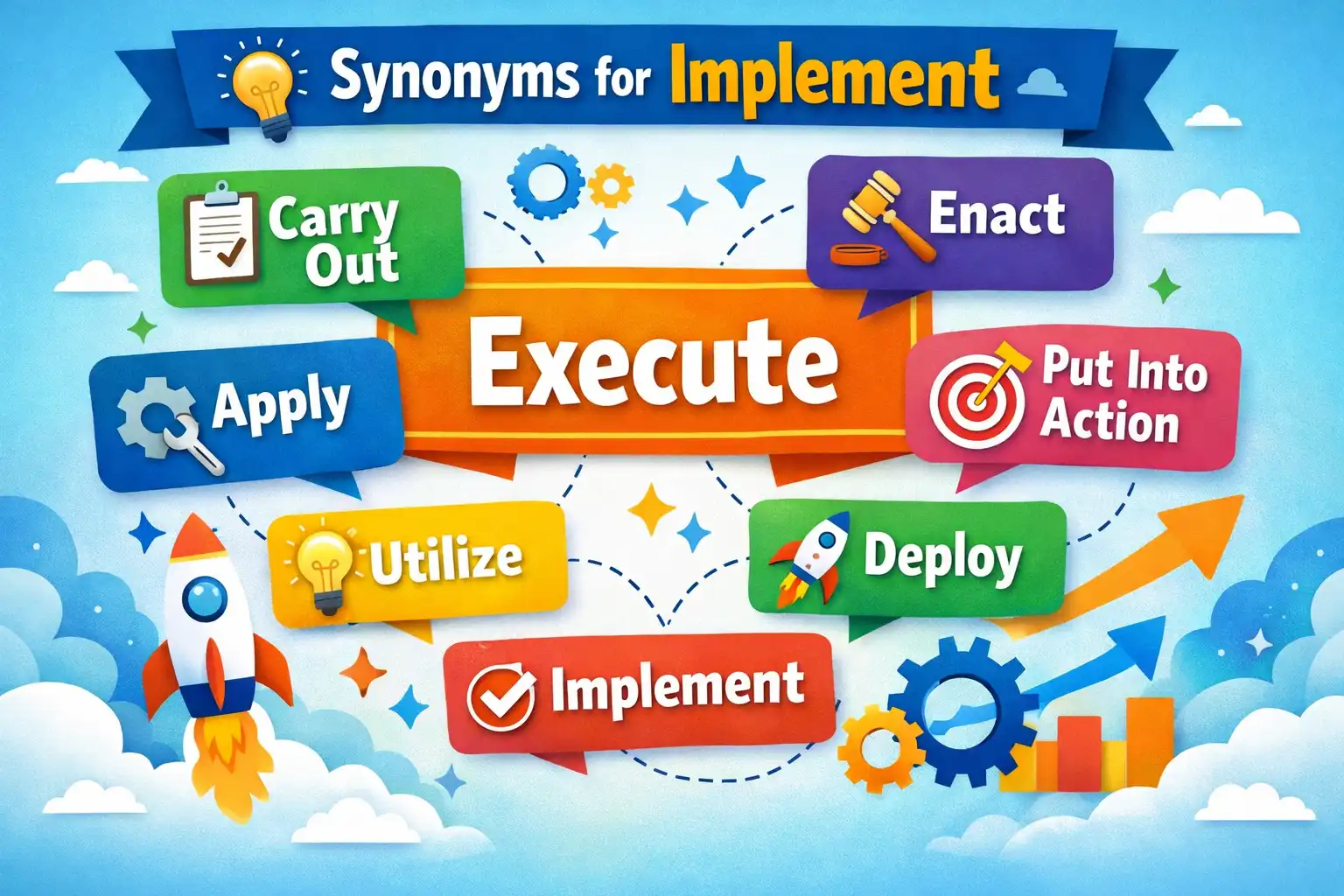
When you need to turn plans into action, using the best synonyms for implement can make your writing much more professional. Learning these synonyms for implement will help you show action and progress without sounding repetitive. By using fresh synonyms for implement, you show readers that you can execute ideas cleanly and clearly.
Imagine a business team sitting in a quiet conference room. They have written a brilliant ten-page plan on a whiteboard, filled with colored arrows and exciting goals. But a plan on a board does not do anything by itself. The team must actually start the work, use the tools, and make the plan real. This action of putting a plan into action is what we call an implement. In simple English, to implement means to start using a plan, a system, or a rule so that it actually happens.
Knowing different words for this action is helpful for everyone. Students can use them to write strong essays with active verbs. Bloggers can use them to keep readers engaged by avoiding repetitive terms. Content writers can use them to write sharp, persuasive copy that drives action. Daily English users can use them to express their daily tasks and achievements clearly at work.
“To implement a plan is to give life to a dream.” — Unknown
“Words show what we want, but to implement shows what we can actually do.” — Unknown
Linguistic Profile of “Implement”
To truly master this word, let us look at its background, pronunciation, and structure:
- Connotative Meaning: Highly active, professional, and practical. It implies action, organization, and bringing ideas to life.
- Etymology:
- From Latin implementum (meaning a filling up or fulfillment).
- From implere (meaning to fill up or finish).
- First recorded in the 14th century to describe tools, and later used as a verb to mean carrying out a plan.
- Pronunciation: US: /ˈɪmpləˌment/ | UK: /ˈɪmplɪment/
- Syllables: Three syllables (im-ple-ment).
- Affixation Pattern: Built from the prefix im- (in/upon) + root plere (to fill) + noun/verb suffix -ment.
Quick Comparison of Core Synonyms
| Keyword | Meaning | Usage Type | Context |
|---|---|---|---|
| Implement | To start using a plan, system, or rule | Professional | Business plans, school rules, tech systems |
| Execute | To perform or complete a planned action | Formal | Military actions, business strategies, tasks |
| Apply | To use a rule, idea, or tool for a job | Neutral | Math problems, paint, rules, jobs |
| Carry out | To do a task that you agreed to do | Casual | Home chores, scientific tests, promises |
| Neglect | To fail to care for or do something | Negative | Unused plans, messy gardens, ignored duties |
| Postpone | To delay doing something until later | Neutral | Late meetings, rainy games, homework |
50 Synonyms for Implement
Here is the complete list of 50 synonyms. Each word has its pronunciation, a simple meaning, and two real-life examples.
1. Execute
- Pronunciation: US: /ˈeksəˌkjuːt/ | UK: /ˈeksɪkjuːt/
- Meaning: To complete a plan or duty successfully.
- Examples:
- The team needs to execute the new marketing plan today.
- She was able to execute the dance moves perfectly.
2. Apply
- Pronunciation: US: /əˈplaɪ/ | UK: /əˈplaɪ/
- Meaning: To use a rule, idea, or tool for a job.
- Examples:
- You should apply this rule to solve the math problem.
- We will apply the new paint to the front door.
3. Perform
- Pronunciation: US: /pərˈfɔːrm/ | UK: /pəˈfɔːm/
- Meaning: To do a piece of work or an action.
- Examples:
- The surgeon will perform the operation in the morning.
- Our computer can perform many tasks at the same time.
4. Enforce
- Pronunciation: US: /ɪnˈfɔːrs/ | UK: /ɪnˈfɔːs/
- Meaning: To make sure people obey a rule or law.
- Examples:
- The police officer is here to enforce the speed limit.
- Teachers must enforce the silence rule in the library.
5. Carry out
- Pronunciation: US: /ˈkæri aʊt/ | UK: /ˈkæri aʊt/
- Meaning: To do a task that you agreed to do.
- Examples:
- Please carry out the trash before you leave the house.
- The scientists will carry out a new test tomorrow.
6. Accomplish
- Pronunciation: US: /əˈkɑːmplɪʃ/ | UK: /əˈkʌmplɪʃ/
- Meaning: To finish a hard task successfully.
- Examples:
- We can accomplish our goals if we work together.
- He wants to accomplish his homework before dinner.
7. Achieve
- Pronunciation: US: /əˈtʃiːv/ | UK: /əˈtʃiːv/
- Meaning: To reach a goal after working very hard.
- Examples:
- She worked for years to achieve her dream of flying.
- You will achieve great results if you study every day.
8. Complete
- Pronunciation: US: /kəmˈpliːt/ | UK: /kəmˈpliːt/
- Meaning: To finish making or doing something.
- Examples:
- He needs to complete the puzzle before bedtime.
- I will complete the report by Friday afternoon.
9. Realize
- Pronunciation: US: /ˈriːəˌlaɪz/ | UK: /ˈrɪəlaɪz/
- Meaning: To make a hope or plan come true.
- Examples:
- It took ten years to realize his dream of owning a shop.
- She will realize her full potential at the new school.
10. Discharge
- Pronunciation: US: /dɪsˈtʃɑːrdʒ/ | UK: /dɪsˈtʃɑːdʒ/
- Meaning: To do a duty or job that you must do.
- Examples:
- The soldier will discharge his duties with honor.
- She must discharge her responsibilities as a team leader.
11. Effect
- Pronunciation: US: /ɪˈfekt/ | UK: /ɪˈfekt/
- Meaning: To make a change or result happen.
- Examples:
- The new laws will effect great changes in the city.
- We hope to effect a peaceful cure for the problem.
12. Administer
- Pronunciation: US: /ədˈmɪnɪstər/ | UK: /ədˈmɪnɪstə/
- Meaning: To manage and run a system or test.
- Examples:
- The principal will administer the school test today.
- She knows how to administer first aid to injured people.
13. Conduct
- Pronunciation: US: /kənˈdʌkt/ | UK: /kənˈdʌkt/
- Meaning: To guide or lead an activity safely.
- Examples:
- The guide will conduct the tour through the museum.
- We need to conduct a search for the lost keys.
14. Fulfill
- Pronunciation: US: /fʊlˈfɪl/ | UK: /fʊlˈfɪl/
- Meaning: To do what is expected or promised.
- Examples:
- He promised to fulfill his duties as class president.
- She hopes to fulfill her dream of traveling the world.
15. Enact
- Pronunciation: US: /ɪnˈækt/ | UK: /ɪnˈækt/
- Meaning: To make a bill into a real law.
- Examples:
- The government will enact a new law to protect trees.
- They want to enact changes to the school lunch program.
16. Establish
- Pronunciation: US: /ɪˈstæblɪʃ/ | UK: /ɪˈstæblɪʃ/
- Meaning: To start a system or group that will last.
- Examples:
- The family wants to establish a new holiday tradition.
- We need to establish clear rules for the game.
17. Run
- Pronunciation: US: /rʌn/ | UK: /rʌn/
- Meaning: To control or manage how a system works.
- Examples:
- She knows how to run a small business smoothly.
- He will run the computer program to check for errors.
18. Operate
- Pronunciation: US: /ˈɑːpəˌreɪt/ | UK: /ˈɒpəreɪt/
- Meaning: To work with or control a machine or plan.
- Examples:
- You must learn how to operate this heavy machine.
- The company will operate under the new rules starting Monday.
19. Employ
- Pronunciation: US: /ɪmˈplɔɪ/ | UK: /ɪmˈplɔɪ/
- Meaning: To use something for a specific purpose.
- Examples:
- We should employ a new method to clean the pool.
- You must employ all your skills to win this match.
20. Utilize
- Pronunciation: US: /ˈjuːtəˌlaɪz/ | UK: /ˈjuːtɪlaɪz/
- Meaning: To use something in a helpful way.
- Examples:
- The writer will utilize a dictionary to find better words.
- We must utilize our time wisely before the test.
21. Introduce
- Pronunciation: US: /ˌɪntrəˈduːs/ | UK: /ˌɪntrəˈdjuːs/
- Meaning: To start using a new system or idea.
- Examples:
- The school will introduce a new music class next term.
- They want to introduce safety rules in the park.
22. Launch
- Pronunciation: US: /lɔːntʃ/ | UK: /lɔːntʃ/
- Meaning: To start a big plan, project, or show.
- Examples:
- The business will launch a new website next month.
- We are ready to launch our science project today.
23. Start
- Pronunciation: US: /stɑːrt/ | UK: /stɑːt/
- Meaning: To begin doing an action or work.
- Examples:
- Let us start the cleaning before the guests arrive.
- She will start her new job next Monday morning.
24. Institute
- Pronunciation: US: /ˈɪnstəˌtuːt/ | UK: /ˈɪnstɪtjuːt/
- Meaning: To set up a new rule or system.
- Examples:
- The boss plans to institute a weekly meeting.
- They will institute a reward program for good students.
25. Practice
- Pronunciation: US: /ˈpræktɪs/ | UK: /ˈpræktɪs/
- Meaning: To do something regularly as a habit.
“The best way to predict the future is to implement it today.” — Unknown
- Examples:
- You should practice good manners when eating dinner.
- They practice writing every single day to get better.
26. Pursue
- Pronunciation: US: /pərˈsuː/ | UK: /pəˈsjuː/
- Meaning: To follow a plan or try to reach a goal.
- Examples:
- He decided to pursue a degree in computer science.
- She will pursue her plan to write a book.
27. Manage
- Pronunciation: US: /ˈmænɪdʒ/ | UK: /ˈmænɪdʒ/
- Meaning: To be in charge of a project or task.
- Examples:
- He will manage the construction of the new house.
- She knows how to manage her time after school.
28. Direct
- Pronunciation: US: /dəˈrekt/ | UK: /daɪˈrekt/
- Meaning: To guide or tell people what to do.
- Examples:
- The leader will direct the team during the project.
- He will direct the traffic away from the accident.
29. Handle
- Pronunciation: US: /ˈhændl/ | UK: /ˈhændl/
- Meaning: To deal with a situation or job successfully.
- Examples:
- She can handle the busy office without any help.
- He knows how to handle difficult customer problems.
30. Stage
- Pronunciation: US: /steɪdʒ/ | UK: /steɪdʒ/
- Meaning: To organize and present a public event or action.
- Examples:
- The club will stage a play to raise money.
- They plan to stage a protest against the new building.
31. Organize
- Pronunciation: US: /ˈɔːrɡəˌnaɪz/ | UK: /ˈɔːɡənaɪz/
- Meaning: To plan and arrange a systematic activity.
- Examples:
- We must organize our files before the meeting starts.
- She loves to organize school events for her friends.
32. Deliver
- Pronunciation: US: /dɪˈlɪvər/ | UK: /dɪˈlɪvə/
- Meaning: To produce the results that you promised.
- Examples:
- The team must deliver the project on time.
- He promised to deliver a great speech at lunch.
33. Produce
- Pronunciation: US: /prəˈduːs/ | UK: /prəˈdjuːs/
- Meaning: To make or create a specific result.
- Examples:
- The factory will produce more toys this winter.
- Our efforts will produce a beautiful garden soon.
34. Bring about
- Pronunciation: US: /brɪŋ əˈbaʊt/ | UK: /brɪŋ əˈbaʊt/
- Meaning: To make something happen that was not there before.
- Examples:
- The new laws will bring about a clean park.
- Hard work can bring about great success in life.
35. Put to use
- Pronunciation: US: /pʊt tuː juːs/ | UK: /pʊt tuː juːs/
- Meaning: To find a practical job for an object or idea.
- Examples:
- We should put to use these old cardboard boxes.
- He will put to use his cooking skills tonight.
36. Act on
- Pronunciation: US: /ækt ɑːn/ | UK: /ækt ɒn/
- Meaning: To do something because of a suggestion or plan.
- Examples:
- She decided to act on her teacher’s advice.
- The system will act on the new command immediately.
37. Finalize
- Pronunciation: US: /ˈfaɪnəˌlaɪz/ | UK: /ˈfaɪnəlaɪz/
- Meaning: To finish the last parts of an agreement or plan.
- Examples:
- We need to finalize the schedule for the trip.
- They will finalize the contract later this afternoon.
38. Transact
- Pronunciation: US: /trænˈsækt/ | UK: /trænˈsækt/
- Meaning: To do business with another person or group.
- Examples:
- They will transact the bank deal tomorrow morning.
- He needs a safe space to transact business deals.
39. Exercise
- Pronunciation: US: /ˈeksərˌsaɪz/ | UK: /ˈeksəsaɪz/
- Meaning: To use a power, right, or plan of action.
- Examples:
- Citizens have the right to exercise their free vote.
- You should exercise caution when walking on ice.
40. Work
- Pronunciation: US: /wɜːrk/ | UK: /wɜːk/
- Meaning: To make a plan succeed by putting effort into it.
- Examples:
- You must work the system to get your money back.
- She knows how to work a room of business leaders.
41. Engineer
- Pronunciation: US: /ˌendʒɪˈnɪr/ | UK: /ˌendʒɪˈnɪə/
- Meaning: To plan and build a project with great skill.
- Examples:
- He helped to engineer the company’s new recovery plan.
- They will engineer a solution to the water leak.
42. Orchestrate
- Pronunciation: US: /ˈɔːrkɪˌstreɪt/ | UK: /ˈɔːkɪstreɪt/
- Meaning: To plan and organize a complicated event carefully.
- Examples:
- She had to orchestrate the entire wedding event alone.
- The group tried to orchestrate a surprise party for him.
43. Coordinate
- Pronunciation: US: /koʊˈɔːrdnˌeɪt/ | UK: /kəʊˈɔːdɪneɪt/
- Meaning: To make different parts of a plan work well together.
- Examples:
- We need to coordinate our schedules for the week.
- She will coordinate the volunteers at the food drive.
44. Dispense
- Pronunciation: US: /dɪˈspens/ | UK: /dɪˈspens/
- Meaning: To give out rules, medicine, or tasks to people.
- Examples:
- The machine will dispense clean water to the users.
- The judge is here to dispense justice to everyone.
45. Deploy
- Pronunciation: US: /dɪˈplɔɪ/ | UK: /dɪˈplɔɪ/
- Meaning: To move tools or people into position for use.
- Examples:
- The army will deploy troops to protect the border.
- We need to deploy the new software tonight.
46. Initiate
- Pronunciation: US: /ɪˈnɪʃiˌeɪt/ | UK: /ɪˈnɪʃieɪt/
- Meaning: To cause a process or action to begin.
- Examples:
- She wanted to initiate a conversation about the rules.
- They will initiate a study on animal behaviors.
47. Actualize
- Pronunciation: US: /ˈæktʃuəˌlaɪz/ | UK: /ˈæktʃʊəlaɪz/
- Meaning: To make an idea become a real thing.
- Examples:
- He will actualize his plans to open a bakery.
- She worked hard to actualize her dream of art.
48. Consummate
- Pronunciation: US: /ˈkɑːnsəˌmeɪt/ | UK: /ˈkɒnsəmeɪt/
- Meaning: To make a deal complete or perfect.
- Examples:
- They will consummate the business deal with a handshake.
- He needs to consummate the contract with a signature.
49. Trigger
- Pronunciation: US: /ˈtrɪɡər/ | UK: /ˈtrɪɡə/
- Meaning: To cause an action or reaction to start suddenly.
- Examples:
- The smoke will trigger the fire alarm system.
- Soft music can trigger happy memories from childhood.
50. Materialize
- Pronunciation: US: /məˈtɪriəˌlaɪz/ | UK: /məˈtɪərɪəlaɪz/
- Meaning: To make something appear or become real.
- Examples:
- Our hopes for a vacation did not materialize this year.
- The ghost seemed to materialize out of the dark.
Antonyms of Implement
If you want to understand the word implement better, it helps to look at its opposite terms. These words show ways of stopping, delaying, or ignoring a plan:
- Neglecting: Failing to care for or carry out an active plan.
- Ignoring: Choosing not to see, use, or act on a system or rule.
- Abondoning: Giving up on a project or system before it is completed.
- Canceling: Deciding that a planned action will not take place.
- Postponing: Putting off the start of a plan until a future time.
Prototype Meaning and Categorization of “Implement”
In cognitive linguistics, the word implement belongs to the mental domain of Action, Management, and Execution.
- Prototype: The most basic form of implementing is a gardener planting a seed in the ground to start a garden according to a drawn plan.
- Radial Categories:
- Physical/Direct: Carry out, perform, run (hands-on, direct action).
- Official/Legal: Enforce, enact, administer (rule-based, authoritative action).
- Strategic/Creative: Launch, orchestrate, initiate (system-level, conceptual action).
Frequently Asked Questions (FAQ)
1. What is the most common synonym for implement?
The most popular everyday synonyms for implement are carry out, apply, and execute.
2. Is there a difference between implement and execute?
Yes! To implement means to start using a broad plan, system, or set of rules. To execute usually means to carry out a specific, planned physical or technical step.
3. What is a highly professional synonym for implement?
In professional or academic writing, words like actualize, administer, or utilize sound more formal and scholarly.
4. Can implementing be used for physical objects?
Yes! As a noun, an implement is a tool, like a shovel or a fork. As a verb, it always means to put a plan into motion.
5. What is the opposite of implementing a rule?
The opposite of implementing a rule is neglecting, repealing, or ignoring the rule completely.
6. Why should I use different synonyms for implement in my essays?
Using different synonyms keeps your writing from sounding boring. It shows your readers exactly how a task or plan is being carried out.
Conclusion
Expanding your active vocabulary with various synonyms for implement is an excellent way to elevate your communication. It completely changes how people read your text and follow your arguments. When you use different action-oriented words, your essays look polished, your blog posts keep readers hooked, and your daily emails sound highly professional.
Instead of writing the word “implement” over and over, try playing with words like executing, actualizing, or carrying out. Try practicing these new terms tomorrow. Drop them into your school essays, work emails, or casual chats with friends. You will soon notice how much more clear and exciting your language becomes!
“A single action implemented is worth a thousand ideas ignored.” — Unknown
“To build great things, we must first learn to implement simple ideas.” — Anonymous

Andrew Collins is an academic English educator with over 12 years of experience helping university students, IELTS candidates, and ESL learners improve their writing vocabulary.