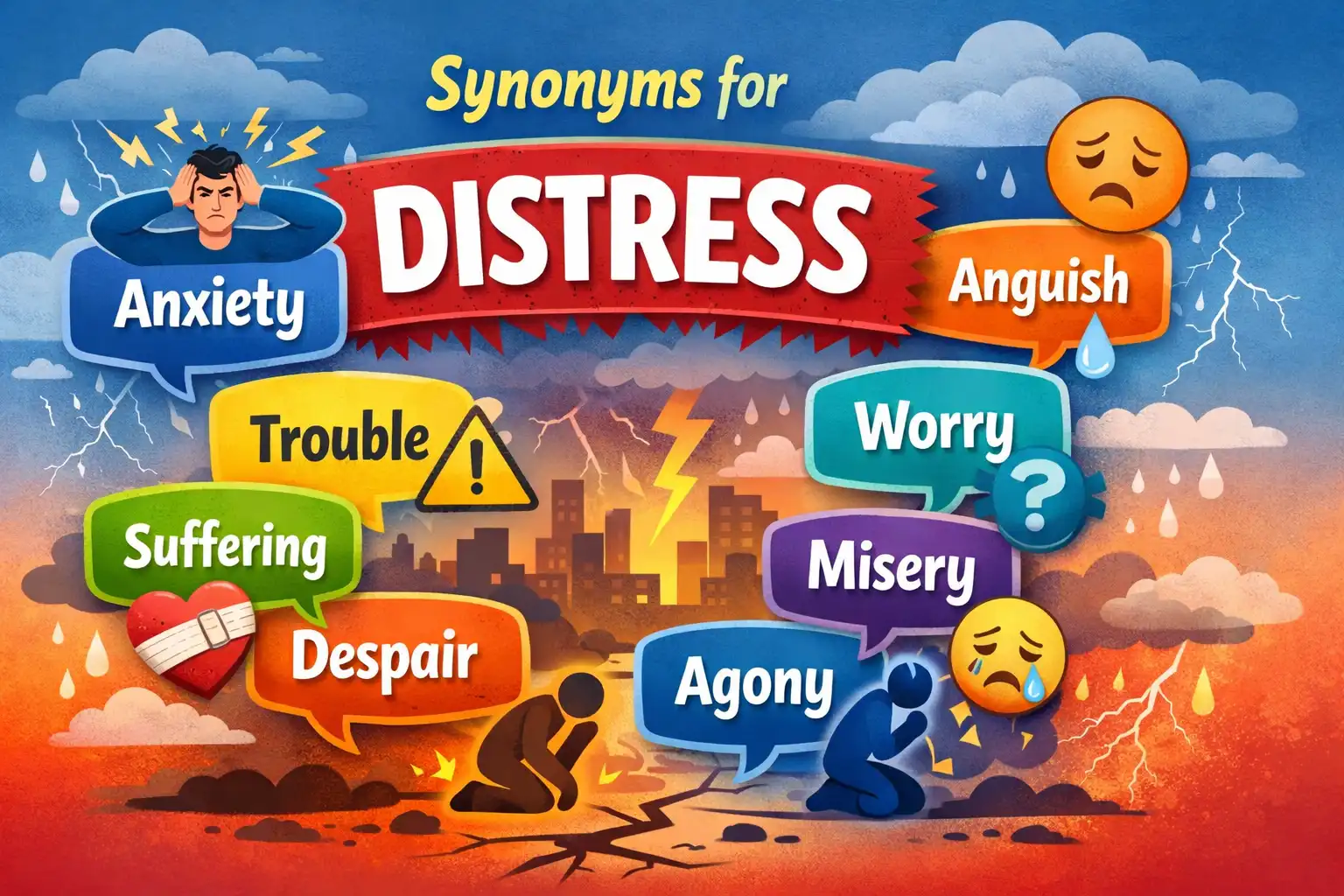
Finding the perfect synonyms for distress can completely transform your writing and make your stories feel more alive. When you learn different synonyms for distress, you avoid using the same boring words over and over again. Knowing strong synonyms for distress helps you describe difficult feelings like worry, pain, or sadness with absolute accuracy.
Imagine walking home under a heavy downpour only to find your front door key is missing. That sudden, sinking feeling in your stomach is exactly what we call distress. Instead of just saying you feel bad, using a more precise word lets your reader feel your exact situation. For example, telling a friend that you are “in distress” immediately lets them know you need help right away.
In very simple English, “distress” means feeling very sad, worried, or in pain because of a bad situation. Students need these terms to earn higher grades on their descriptive school essays. Bloggers and content writers use them to keep readers hooked with emotionally engaging posts. Daily English speakers use them to share their true feelings clearly with friends.
“Out of suffering have emerged the strongest souls; the most massive characters are seared with scars.” — Kahlil Gibran
“The greatest glory in living lies not in never falling, but in rising every time we fall.” — Nelson Mandela
Linguistic Profile of “Distress”
To truly understand how to use synonyms for distress, let’s look at the linguistic makeup of the word itself.
- Connotative Meaning: As a noun, “distress” carries heavy emotional weight, conveying pain, anxiety, urgency, or physical suffering. As a verb, it means to cause someone deep worry or pain.
- Etymology:
- Derived from the Old French word destresse (meaning grief, misery, or anguish).
- Rooted in the Vulgar Latin districtia (meaning restraint or narrowness), which comes from Latin distringere (meaning to pull apart).
- Pronunciation: US:
/dɪˈstres/| UK:/dɪˈstres/ - Syllables: dis-tress ($2$ syllables)
- Affixation Pattern: Base word from Latin roots, which can take inflectional suffixes like -ed (distressed) or -ing (distressing).
Comparison of Core Synonyms
| Keyword | Meaning | Usage Type | Context |
|---|---|---|---|
| Distress | Extreme worry, sadness, or pain. | Emotional / Neutral | Dealing with crises, health issues, or personal struggles. |
| Anguish | Severe mental or physical pain. | Formal / Intense | Serious loss, tragic events, or deep mourning. |
| Anxiety | A feeling of worry, nervousness, or unease. | Emotional / Clinical | School tests, work meetings, or mental health. |
| Trouble | Problems, difficulties, or worries. | Conversational | Everyday challenges, broken tools, or minor arguments. |
| Misery | A state of great unhappiness or discomfort. | Descriptive | Extreme poverty, bad weather, or long illness. |
50 Detailed Synonyms for Distress
1. Anguish
Pronunciation: US: /ˈæŋ.ɡwɪʃ/ | UK: /ˈæŋ.ɡwɪʃ/
Meaning: This means severe mental or physical pain and suffering.
Examples:
- She felt deep anguish after losing her favorite pet.
- The hurt player cried out in anguish on the field.
2. Agony
Pronunciation: US: /ˈæɡ.ə.ni/ | UK: /ˈæɡ.ə.ni/
Meaning: This describes extreme physical or mental pain that is hard to bear.
Examples:
- Waiting for the doctor’s news was pure agony.
- His broken arm caused him great agony.
3. Grief
Pronunciation: US: /ɡriːf/ | UK: /ɡriːf/
Meaning: This is deep sadness caused by someone’s death or a major loss.
Examples:
- The whole town shared in her grief.
- Time helped to ease his terrible grief.
4. Sorrow
Pronunciation: US: /ˈsɑːr.oʊ/ | UK: /ˈsɒr.əu/
Meaning: This is a feeling of great sadness or regret.
Examples:
- He expressed his deep sorrow for the mistake.
- Her eyes were filled with quiet sorrow.
5. Misery
Pronunciation: US: /ˈmɪz.ɚ.i/ | UK: /ˈmɪz.ər.i/
Meaning: This describes a state of great unhappiness or uncomfortable living conditions.
Examples:
- The cold rain brought misery to the campers.
- He wanted to escape from his daily misery.
6. Torment
Pronunciation: US: /ˈtɔːr.ment/ | UK: /ˈtɔː.ment/
Meaning: This means great mental suffering or physical pain.
Examples:
- Loud noises can be a torment to shy dogs.
- She lived in constant torment because of her secret.
7. Suffering
Pronunciation: US: /ˈsʌf.ɚ.ɪŋ/ | UK: /ˈsʌf.ər.ɪŋ/
Meaning: This is the state of undergoing pain, distress, or hardship.
Examples:
- The new medicine helped end his physical suffering.
- We must work together to reduce human suffering.
8. Woe
Pronunciation: US: /woʊ/ | UK: /wəʊ/
Meaning: This is a formal word for great sorrow or distress.
Examples:
- The old book tells a sad story of woe.
- He shared his financial woes with a trusted friend.
9. Worry
Pronunciation: US: /ˈwɝː.i/ | UK: /ˈwʌr.i/
Meaning: This is the state of feeling anxious or troubled about real or potential problems.
Examples:
- Her mind was full of worry about the math test.
- Please do not let small problems cause you worry.
10. Pain
Pronunciation: US: /peɪn/ | UK: /peɪn/
Meaning: This is a highly unpleasant physical or emotional feeling.
Examples:
- The sharp pain in his tooth made him frown.
- She felt the emotional pain of saying goodbye.
11. Sadness
Pronunciation: US: /ˈsæd.nəs/ | UK: /ˈsæd.nəs/
Meaning: This is the condition of feeling unhappy or down.
Examples:
- A wave of sadness hit him during the movie.
- There was no trace of sadness in her happy voice.
12. Affliction
Pronunciation: US: /əˈflɪk.ʃən/ | UK: /əˈflɪk.ʃən/
Meaning: This is something that causes pain or suffering.
Examples:
- Blindness is a difficult affliction to live with.
- They faced their family affliction with great courage.
13. Heartache
Pronunciation: US: /ˈhɑːrt.eɪk/ | UK: /ˈhɑːt.eɪk/
Meaning: This is emotional pain or grief, usually from love or loss.
Examples:
- Breaking up with her best friend caused her heartache.
- The sad song was all about love and heartache.
14. Trouble
Pronunciation: US: /ˈtrʌb.əl/ | UK: /ˈtrʌb.əl/
Meaning: This describes problems, worries, or difficulties.
Examples:
- I do not want to cause any trouble for you.
- He had some trouble fixing the broken bike.
15. Despair
Pronunciation: US: /dɪˈsper/ | UK: /dɪˈspeər/
Meaning: This is the complete loss or absence of hope.
Examples:
- He gave up his search for the keys in despair.
- Do not let despair take over your mind.
16. Desolation
Pronunciation: US: /ˌdes.əˈleɪ.ʃən/ | UK: /ˌdes.əˈleɪ.ʃən/
Meaning: This is a feeling of being completely lonely and sad.
Examples:
- The empty streets filled him with a sense of desolation.
- She overcame her desolation by making new friends.
17. Tribulation
Pronunciation: US: /ˌtrɪb.jəˈleɪ.ʃən/ | UK: /ˌtrɪb.jəˈleɪ.ʃən/
Meaning: This is a cause of great trouble or suffering.
Examples:
- The young pioneers faced many tribulations on their journey.
- We laughed about our trials and tribulations later.
18. Anxiety
Pronunciation: US: /æŋˈzaɪ.ə.t̬i/ | UK: /æŋˈzaɪ.ə.ti/
Meaning: This is a feeling of worry, nervousness, or unease.
Examples:
- Taking deep breaths can help lower your anxiety.
- He felt a lot of anxiety before speaking on stage.
19. Unease
Pronunciation: US: /ʌnˈiːz/ | UK: /ʌnˈiːz/
Meaning: This is a feeling of worry or slight fear.
Examples:
- She felt a sudden sense of unease in the dark hallway.
- His strange silence created unease among his friends.
20. Dread
Pronunciation: US: /dred/ | UK: /dred/
Meaning: This is great fear or apprehension about something in the future.
Examples:
- I look forward to the party but dread the long drive.
- A feeling of dread washed over him when the phone rang.
21. Adversity
Pronunciation: US: /ədˈvɝː.sə.t̬i/ | UK: /ədˈvɜː.sə.ti/
Meaning: This is a difficult or unpleasant situation.
Examples:
- She showed great strength in the face of adversity.
- Overcoming adversity makes you a stronger person.
22. Hardship
Pronunciation: US: /ˈhɑːrd.ʃɪp/ | UK: /ˈhɑːt.ʃɪp/
Meaning: This is severe suffering or a lack of basic needs.
Examples:
- The cold winter brought great hardship to the valley.
- They survived the hardship of losing their home.
23. Misfortune
Pronunciation: US: /ˌmɪsˈfɔːr.tʃən/ | UK: /ˌmɪsˈfɔː.tʃuːn/
Meaning: This is bad luck or an unlucky event.
Examples:
- It was his misfortune to arrive just as the train left.
- She did not let her misfortune ruin her positive attitude.
24. Calamity
Pronunciation: US: /kəˈlæm.ə.t̬i/ | UK: /kəˈlæm.ə.ti/
Meaning: This is an event causing great and sudden damage or distress.
Examples:
- The sudden storm was a calamity for the local crops.
- We must prepare well to avoid a major calamity.
“Tension is who you think you should be. Relaxation is who you are.” — Chinese Proverb
25. Stress
Pronunciation: US: /stres/ | UK: /stres/
Meaning: This is mental or emotional strain caused by demanding situations.
Examples:
- School exams can cause a lot of stress for kids.
- She does yoga to manage her daily stress.
26. Tension
Pronunciation: US: /ˈten.ʃən/ | UK: /ˈten.ʃən/
Meaning: This is a feeling of worry and nervousness that makes relaxation difficult.
Examples:
- You could feel the tension in the quiet courtroom.
- Warm water helps to release the tension in your shoulders.
27. Apprehension
Pronunciation: US: /ˌæp.rəˈhen.ʃən/ | UK: /ˌæp.rəˈhen.ʃən/
Meaning: This is anxiety or fear that something bad will happen.
Examples:
- He knocked on the principal’s door with some apprehension.
- She felt a mix of excitement and apprehension about moving.
28. Discomfort
Pronunciation: US: /dɪˈskʌm.fɚt/ | UK: /dɪˈskʌm.fət/
Meaning: This is a state of minor physical or mental unease.
Examples:
- The hard wooden chair caused him great discomfort.
- She felt some discomfort talking about her mistakes.
29. Unhappiness
Pronunciation: US: /ʌnˈhæp.i.nəs/ | UK: /ʌnˈhæp.i.nəs/
Meaning: This is the state of not feeling happy or satisfied.
Examples:
- He hid his unhappiness behind a fake smile.
- They worked hard to solve the cause of their unhappiness.
30. Gloom
Pronunciation: US: /ɡluːm/ | UK: /ɡluːm/
Meaning: This is a state of depression, sadness, or darkness.
Examples:
- The bad news cast a thick gloom over the party.
- He sat alone in the gloom of his bedroom.
31. Regret
Pronunciation: US: /rɪˈɡret/ | UK: /rɪˈɡret/
Meaning: This is a feeling of sadness about something you did or did not do.
Examples:
- She felt deep regret for yelling at her sister.
- He has no regrets about his career choices.
32. Heartbreak
Pronunciation: US: /ˈhɑːrt.breɪk/ | UK: /ˈhɑːt.breɪk/
Meaning: This is overwhelming distress, sadness, or disappointment.
Examples:
- Losing the final game was a major heartbreak for the team.
- She wrote a poem to express her recent heartbreak.
33. Dismay
Pronunciation: US: /dɪsˈmeɪ/ | UK: /dɪsˈmeɪ/
Meaning: This is a feeling of distress or disappointment caused by something unexpected.
Examples:
- To our dismay, the beautiful cake fell on the floor.
- He looked at his messy bedroom with great dismay.
34. Concern
Pronunciation: US: /kənˈsɝːn/ | UK: /kənˈsɜːn/
Meaning: This is a feeling of worry or care about a situation.
Examples:
- The teacher showed real concern for my low grades.
- Your health is our main concern right now.
35. Perturbation
Pronunciation: US: /ˌpɝː.tɚˈbeɪ.ʃən/ | UK: /ˌpɜː.təˈbeɪ.ʃən/
Meaning: This is a formal word for mental unease, worry, or disturbance.
Examples:
- She controlled her perturbation and answered the question calmly.
- His strange behavior caused perturbation among his coworkers.
36. Agitation
Pronunciation: US: /ˌædʒ.əˈteɪ.ʃən/ | UK: /ˌædʒ.ɪˈteɪ.ʃən/
Meaning: This is a state of anxiety or nervous excitement.
Examples:
- The angry customer spoke with clear agitation.
- He paced the floor in his agitation.
37. Chagrin
Pronunciation: US: /ʃəˈɡrɪn/ | UK: /ˈʃæɡ.rɪn/
Meaning: This is a feeling of distress or embarrassment caused by failure.
Examples:
- Much to his chagrin, he forgot his lines on stage.
- She swallowed her chagrin and congratulated the winner.
38. Vexation
Pronunciation: US: /vekˈseɪ.ʃən/ | UK: /vekˈseɪ.ʃən/
Meaning: This is the state of feeling annoyed, frustrated, or worried.
Examples:
- He bit his lip in vexation when the computer crashed.
- The constant delays were a source of great vexation.
39. Melancholy
Pronunciation: US: /ˈmel.əŋ.kɑː.li/ | UK: /ˈmel.əŋ.kɒl.i/
Meaning: This is a deep, quiet, and long-lasting sadness.
Examples:
- Rain always puts me in a state of melancholy.
- She looked at the old photos with gentle melancholy.
40. Despondency
Pronunciation: US: /dɪˈspɑːn.dən.si/ | UK: /dɪˈspɒn.dən.si/
Meaning: This is a state of low spirits caused by a loss of hope or courage.
Examples:
- He fell into despondency after failing his driving test.
- Her cheerful friends helped rescue her from despondency.
41. Dejection
Pronunciation: US: /dɪˈdʒek.ʃən/ | UK: /dɪˈdʒek.ʃən/
Meaning: This is a sad state of mind caused by failure or disappointment.
Examples:
- The players walked off the field in dejection.
- He sat in quiet dejection after hearing the bad news.
42. Gloominess
Pronunciation: US: /ˈɡluː.mi.nəs/ | UK: /ˈɡluː.mi.nəs/
Meaning: This is a sad or dark state without any light or hope.
Examples:
- The gloominess of the winter day made her want to sleep.
- He tried to cheer his family up and banish the gloominess.
43. Trial
Pronunciation: US: /traɪəl/ | UK: /traɪəl/
Meaning: This is a difficult experience or person that tests your patience.
Examples:
- Living without electricity was a true trial for them.
- Her puppy was a sweet trial during his chewing phase.
44. Burden
Pronunciation: US: /ˈbɝː.dən/ | UK: /ˈbɜː.dən/
Meaning: This is a heavy load or a difficult duty that causes worry.
Examples:
- She did not want to become a financial burden to her parents.
- Carrying that big secret felt like a heavy burden.
45. Catastrophe
Pronunciation: US: /kəˈtæs.trə.fi/ | UK: /kəˈtæs.trə.fi/
Meaning: This is a sudden disaster that causes great damage or suffering.
Examples:
- The flood was a complete catastrophe for the small town.
- Bad planning turned our school play into a catastrophe.
46. Ordeal
Pronunciation: US: /ɔːrˈdiːl/ | UK: /ɔːˈdiːl/
Meaning: This is a very painful, difficult, or scary experience.
Examples:
- Being lost in the woods was a terrifying ordeal.
- She smiled happily once the dental ordeal was over.
47. Strain
Pronunciation: US: /streɪn/ | UK: /streɪn/
Meaning: This is worry or tension caused by difficult circumstances.
Examples:
- Working two jobs put a heavy strain on his health.
- The high cost of food is a strain on their budget.
48. Harassment
Pronunciation: US: /həˈræs.mənt/ | UK: /ˈhær.əs.mənt/
Meaning: This is behavior that is threatening, annoying, or distressing to someone.
Examples:
- The company has strict rules against workplace harassment.
- He blocked the user to stop the constant online harassment.
49. Torture
Pronunciation: US: /ˈtɔːr.tʃɚ/ | UK: /ˈtɔː.tʃə/
Meaning: This is extreme physical or mental suffering.
Examples:
- Sitting through that boring meeting was absolute torture.
- The sore tooth was pure torture until the dentist fixed it.
50. Disquiet
Pronunciation: US: /dɪsˈkwaɪ.ət/ | UK: /dɪsˈkwaɪ.ət/
Meaning: This is a feeling of anxiety, worry, or unease.
Examples:
- Strange noises from the basement caused her great disquiet.
- Public disquiet grew when the local prices went up again.
Antonyms of “Distress”
If you want to say the opposite of distress, you can use these words:
- Comfort: A state of physical ease and freedom from pain or constraint.
- Happiness: The feeling of being happy, joyful, and satisfied.
- Peace: A quiet state of mind free from worry or fighting.
- Relief: A warm feeling of reassurance following release from anxiety or distress.
- Joy: A feeling of great pleasure and happiness.
Prototype Meaning and Categorization of “Distress”
Linguists categorize words to help us understand where they fit in our minds. Here is how “distress” fits into English categories:
- Prototype Meaning: Deep emotional pain, physical suffering, or the urgent state of needing immediate help.
- Grammatical Category: Noun and Verb.
- Semantic Domain: Emotion, adversity, physical sensation, and urgency.
Frequently Asked Questions
1. What is the simple meaning of distress?
The word “distress” means feeling very sad, worried, or in physical pain because of a bad or difficult situation.
2. Can distress be used as a verb?
Yes! “Distress” is a verb when it means to make someone feel very worried or sad, as in: “The bad news will distress her.”
3. What is the difference between distress and stress?
“Stress” is tension caused by busy or hard situations, while “distress” is a much deeper feeling of sadness, pain, or danger.
4. What does “in distress” mean for ships or planes?
When a ship or plane is “in distress,” it means they are in serious danger and need immediate help to survive.
5. What are the best synonyms for distress in formal essays?
In school or work papers, use formal words like “adversity,” “tribulation,” “anguish,” or “despondency” to sound professional.
6. Why should writers learn synonyms for distress?
Since “distress” has many levels of meaning, using synonyms helps you show the exact type of pain or worry your characters are feeling.
Conclusion
Expanding your vocabulary with synonyms for distress is a beautiful step toward becoming a more confident and fluent writer. When you learn to vary your words, you instantly improve your blogging, speaking, writing, and daily communication skills. Instead of repeating the same simple words, you can paint a clear and colorful picture with your sentences that will keep your readers hooked from the very first line to the last.
We encourage you to start practicing these new terms today. Try slipping a professional word like “adversity” into your next school essay, or use a comforting word like “relief” in an email to a friend. Even in daily conversations, swapping out repetitive words for fresh options will make you sound more articulate and creative. With just a little bit of practice, your words will flow with a beautiful, natural rhythm that everyone will enjoy reading.
“Words are keys that can open minds and hearts.” — Unknown
“The limits of my language mean the limits of my world.” — Ludwig Wittgenstein

Andrew Collins is an academic English educator with over 12 years of experience helping university students, IELTS candidates, and ESL learners improve their writing vocabulary.