Introduction
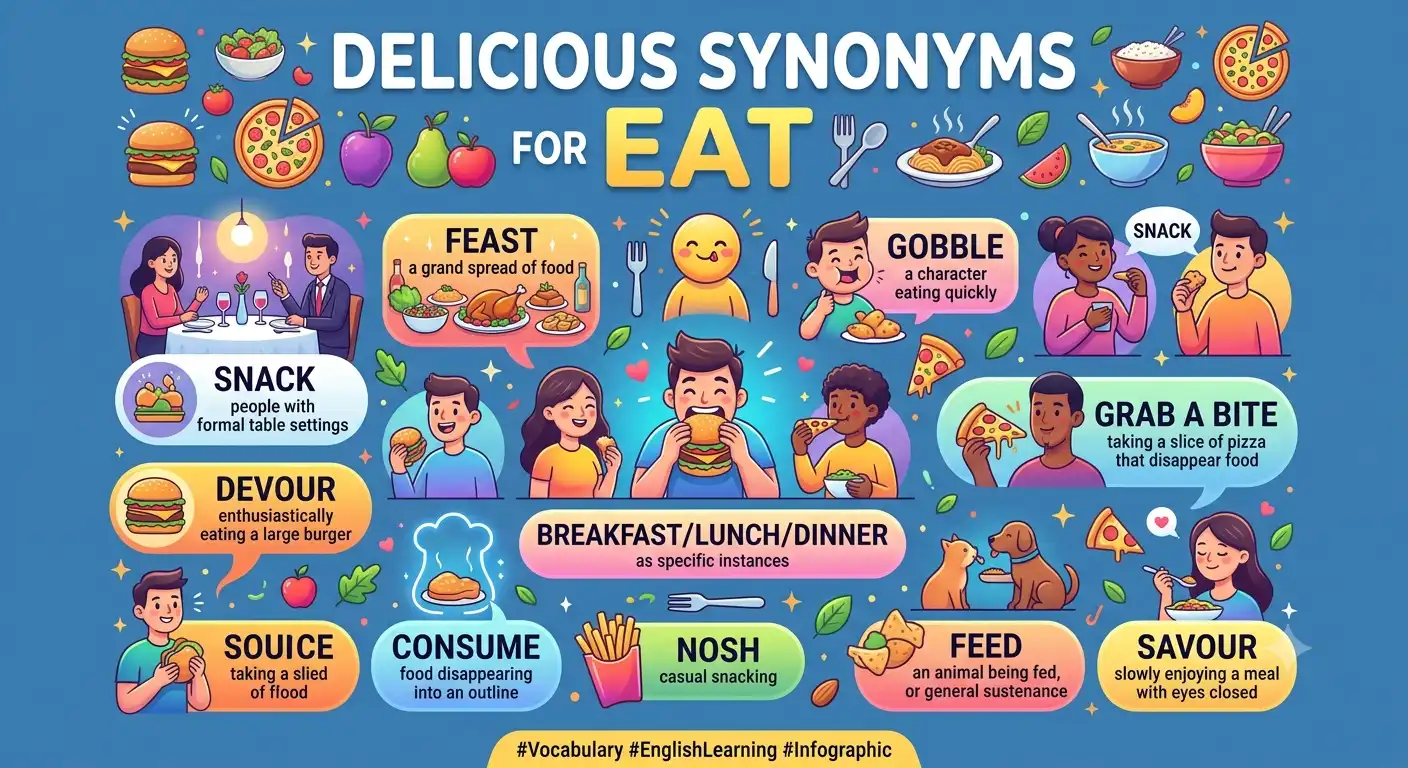
Synonyms for eat are alternative words and phrases used to describe consuming food, tasting meals, and avoiding repetitive verbs. Finding the right synonyms for eat helps you make your writing more vivid, clear, and engaging. Imagine sitting down at a crowded dinner table with friends after a long day. You want to describe how everyone is enjoying their food, but you find yourself using the same basic verb over and over. It sounds boring and repetitive. Good writing thrives on vibrant vocabulary and careful word choices. When you discover different synonyms for eat, your sentences instantly become more delicious, descriptive, and professional for your audience.
For example, instead of writing “I want to eat dinner,” you can say, “I want to feast on dinner.”
In very simple English, eat means to put food in your mouth and swallow it.
This word is useful for:
- Students writing clear essays and reports.
- Bloggers crafting engaging lifestyle and food posts.
- Content writers building smooth descriptions.
- Daily English users communicating their ideas clearly.
“One cannot think well, love well, sleep well, if one has not dined well.” — Virginia Woolf
“Let food be thy medicine and medicine be thy food.” — Hippocrates
Linguistic Profile of “Eat”
- Connotative Meaning: Nourishment, pleasure, survival, community, and enjoyment.
- Etymology: Derived from Old English etan, originating from Proto-Germanic etaną and Proto-Indo-European ed-.
- Pronunciation (US): /iːt/
- Pronunciation (UK): /iːt/
- Syllables: One syllable total (eat).
- Affixation Pattern: Root verb form (no complex affixes).
Comparison Table
| Keyword | Meaning | Usage Type | Context |
|---|---|---|---|
| Eat | Put food in mouth | Casual / Standard | Everyday speech and general writing |
| Consume | Eat or use up | Formal / Professional | Business reports and scientific texts |
| Devour | Eat hungrily or fast | Emotional / Casual | Hungry eaters and expressive stories |
| Dine | Eat a formal meal | Formal / Polite | Restaurants and nice evening dinners |
| Munch | Eat quietly with crunch | Casual / Playful | Snacks, popcorn, and light bites |
| Ingest | Take food into body | Professional / Medical | Health guides and clinical contexts |
1. Consume
Pronunciation (US & UK): /kənˈsuːm/ Meaning: It means to eat or drink something completely. Examples:
- He will consume a large bowl of hot soup.
- Birds consume seeds found on the grassy lawn.
2. Devour
Pronunciation (US & UK): /dɪˈvaʊər/ (US), /dɪˈvaʊə/ (UK) Meaning: It means to eat food quickly and with great hunger. Examples:
- The hungry dog will devour his fresh meal.
- She was so tired she could devour a pizza.
3. Dine
Pronunciation (US & UK): /daɪn/ Meaning: It means to eat the main meal of the day. Examples:
- They love to dine at cozy local restaurants.
- We will dine on steak and baked potatoes tonight.
4. Feast
Pronunciation (US & UK): /fiːst/ Meaning: It means to eat a large and delicious meal. Examples:
- Families gather to feast on roasted holiday turkey.
- We can feast on fresh fruit all summer long.
5. Gobble
Pronunciation (US & UK): /ˈɡɑːbəl/ (US), /ˈɡɒbəl/ (UK) Meaning: It means to eat food fast and in big chunks. Examples:
- The puppy tried to gobble his meat treats.
- Kids love to gobble sweet chocolate candy bars.
6. Swallow
Pronunciation (US & UK): /ˈswɑːloʊ/ (US), /ˈswɒləʊ/ (UK) Meaning: It means to pass food down your throat. Examples:
- Chew your food well before you swallow it.
- He took a sip of water to swallow.
7. Bite
Pronunciation (US & UK): /baɪt/ Meaning: It means to cut food using your sharp teeth. Examples:
- Take a big bite of this sweet red apple.
- He likes to bite into crisp corn on cobs.
8. Chew
Pronunciation (US & UK): /tʃuː/ Meaning: It means to crush food using your teeth. Examples:
- Always chew your food slowly before swallowing.
- The baby loves to chew soft teething biscuits.
9. Taste
Pronunciation (US & UK): /teɪst/ Meaning: It means to sample the flavor of food. Examples:
- Taste this warm soup to see if it needs salt.
- She wanted to taste the creamy strawberry cake.
10. Sample
Pronunciation (US & UK): /ˈsæmpəl/ (US), /ˈsɑːmpəl/ (UK) Meaning: It means to try a small amount of food. Examples:
- Customers can sample free cheese at the market.
- Try to sample different treats at the bakery.
11. Graze
Pronunciation (US & UK): /ɡreɪz/ Meaning: It means to eat small amounts of food over time. Examples:
- Cows graze on green grass in the open field.
- She likes to graze on nuts during work hours.
12. Snack
Pronunciation (US & UK): /snæk/ Meaning: It means to eat a small portion of food. Examples:
- Grab an apple to snack on after school ends.
- He likes to snack on popcorn while watching movies.
13. Munch
Pronunciation (US & UK): /mʌntʃ/ Meaning: It means to eat steadily with a crunching sound. Examples:
- Rabbits munch happily on crunchy orange carrots.
- Kids munch on crackers during playtime breaks.
14. Crunch
Pronunciation (US & UK): /krʌntʃ/ Meaning: It means to chew food with a noisy sound. Examples:
- Fresh celery sticks crunch loudly when bitten.
- He loves to crunch hard roasted peanuts.
15. Nibble
Pronunciation (US & UK): /ˈnɪbəl/ Meaning: It means to take very small bites of food. Examples:
- Mice nibble on tiny pieces of yellow cheese.
- She began to nibble her dry toast gently.
16. Gnaw
Pronunciation (US & UK): /nɔː/ Meaning: It means to bite or chew on something persistently. Examples:
- The cute puppy likes to gnaw on bones.
- Beavers gnaw on thick tree trunks near rivers.
17. Feast upon
Pronunciation (US & UK): /fiːst əˈpɑːn/ (US), /fiːst əˈpɒn/ (UK) Meaning: It means to enjoy a rich meal with delight. Examples:
- Guests will feast upon fresh seafood at dinner.
- Kings would feast upon grand holiday spreads.
18. Feed
Pronunciation (US & UK): /fiːd/ Meaning: It means to give food to a person or animal. Examples:
- Remember to feed your pet cat every morning.
- Parents feed healthy meals to growing children.
19. Nourish
Pronunciation (US & UK): /ˈnɜːrɪʃ/ (US), /ˈnʌrɪʃ/ (UK) Meaning: It means to provide food needed for life and health. Examples:
- Fresh vegetables nourish our bodies with vitamins.
- Good soup helps nourish a person fighting colds.
20. Sustenance
Pronunciation (US & UK): /ˈsʌstənəns/ Meaning: It means providing food and drink for survival. Examples:
- Bread and water provide basic daily sustenance.
- Explorers packed enough food sustenance for trips.
21. Refresh
Pronunciation (US & UK): /rɪˈfrɛʃ/ Meaning: It means to restore energy by eating or drinking. Examples:
- Cool water will refresh you on a hot day.
- Eat a light fruit snack to refresh your body.
22. Re-fuel
Pronunciation (US & UK): /riːˈfjuːl/ Meaning: It means to supply your body with fresh food energy. Examples:
- Athletes eat bananas to refuel after hard games.
- Take a lunch break to refuel your energy.
23. Ingest
Pronunciation (US & UK): /ɪnˈdʒɛst/ Meaning: It means to take food into your body by swallowing. Examples:
- Do not ingest wild berries found in forests.
- Humans ingest healthy nutrients through balanced diets.
24. Swallow up
Pronunciation (US & UK): /ˈswɑːloʊ ʌp/ (US), /ˈswɒləʊ ʌp/ (UK) Meaning: It means to engulf or consume something entirely. Examples:
- High waves swallow up small toy boats.
- The dark cave seemed to swallow up light.
25. Put away
Pronunciation (US & UK): /pʊt əˈweɪ/ Meaning: It means to eat a large quantity of food quickly. Examples:
- He can put away three burgers in one sitting.
- She helped put away the leftover party cake.
26. Pitch into
Pronunciation (US & UK): /pɪtʃ ˈɪntuː/ Meaning: It means to start eating eagerly and with energy. Examples:
- Everyone sat down and began to pitch into dinner.
- Pitch into those warm cookies before they cool.
27. Tuck into
Pronunciation (US & UK): /tʌk ˈɪntuː/ Meaning: It means to start eating food with enjoyment. Examples:
- Ready your forks and tuck into the hot pie.
- He was happy to tuck into a warm bowl.
28. Bolt
Pronunciation (US & UK): /boʊlt/ (US), /bəʊlt/ (UK) Meaning: It means to swallow food quickly without chewing. Examples:
- Do not bolt your food down too fast.
- The rushed worker had to bolt his sandwich.
29. Swallow down
Pronunciation (US & UK): /ˈswɑːloʊ daʊn/ (US), /ˈswɒləʊ daʊn/ (UK) Meaning: It means to force food down your throat quickly. Examples:
- He tried to swallow down the bitter pill.
- She had to swallow down her lunch in a hurry.
30. Wolf down
Pronunciation (US & UK): /wʊlf daʊn/ Meaning: It means to eat food very fast like a hungry animal. Examples:
- He went home and had to wolf down his meal.
- The kids wolf down pancakes on Saturday mornings.
31. Pig out
Pronunciation (US & UK): /pɪɡ aʊt/ Meaning: It means to eat a very large amount of food. Examples:
- Friends gathered to watch games and pig out.
- We love to pig out on movie theater popcorn.
32. Gorge
Pronunciation (US & UK): /ɡɔːrdʒ/ (US), /ɡɔːdʒ/ (UK) Meaning: It means to eat greedily until completely full. Examples:
- Bears gorge on sweet berries before winter sleep.
- Do not gorge on too many sugary treats.
33. Overeat
Pronunciation (US & UK): /ˌoʊvərˈiːt/ (US), /ˌəʊvəˈiːt/ (UK) Meaning: It means to eat more food than your body needs. Examples:
- It is easy to overeat at holiday dinner parties.
- Try not to overeat heavy meals before bed.
34. Stuff
Pronunciation (US & UK): /stʌf/ Meaning: It means to fill yourself with too much food. Examples:
- He began to stuff his face with chocolate cake.
- Do not stuff yourself before running a race.
35. Cram
Pronunciation (US & UK): /kræm/ Meaning: It means to push food into your mouth tightly. Examples:
- He tried to cram a huge sandwich into his mouth.
- She packed her bag and tried to cram lunch in.
36. Lick
Pronunciation (US & UK): /lɪk/ Meaning: It means to pass your tongue over food. Examples:
- Kids love to lick melting ice cream cones.
- The cat came over to lick the empty bowl.
37. Sip
Pronunciation (US & UK): /sɪp/ Meaning: It means to drink liquid in very small amounts. Examples:
- Sip your hot tea slowly so you do not burn.
- She took a small sip of cold lemon water.
38. Swallow whole
Pronunciation (US & UK): /ˈswɑːloʊ hoʊl/ (US), /ˈswɒləʊ həʊl/ (UK) Meaning: It means to swallow an item without chewing it. Examples:
- Snakes can swallow small mice whole.
- Do not try to swallow large pills whole.
39. Break bread
Pronunciation (US & UK): /breɪk brɛd/ Meaning: It means to share a meal together in peace. Examples:
- Neighbors gathered to break bread and talk.
- Families break bread during holiday celebrations.
40. Supped
Pronunciation (US & UK): /sʌpt/ Meaning: It means having eaten soup or an evening meal. Examples:
- They had supped on hot broth by the fire.
- After they supped, they went outside to walk.
41. Slurp
Pronunciation (US & UK): /slɜːrp/ (US), /slɜːp/ (UK) Meaning: It means to eat or drink with a noisy sound. Examples:
- It is funny to slurp hot noodle soup.
- He tried not to slurp his morning milk.
42. Partake
Pronunciation (US & UK): /pɑːrˈteɪk/ (US), /pɑːˈteɪk/ (UK) Meaning: It means to take part in eating or drinking food. Examples:
- Please partake in the baked birthday cake.
- All guests were invited to partake in dinner.
43. Sampled
Pronunciation (US & UK): /ˈsæmpəld/ (US), /ˈsɑːmpəld/ (UK) Meaning: It means having tested a small bit of food. Examples:
- She sampled the cheese at the local market.
- We sampled different flavors of sweet jam.
44. Browse
Pronunciation (US & UK): /braʊz/ Meaning: It means to eat casually from various dishes. Examples:
- Guests browse through snack platters at parties.
- The horse will browse on green meadow grass.
45. Pasture
Pronunciation (US & UK): /ˈpæstʃər/ (US), /ˈpɑːstʃə/ (UK) Meaning: It means to feed on growing grass outdoors. Examples:
- Sheep pasture peacefully in the green hills.
- Cows find good grass to pasture all day.
46. Browse on
Pronunciation (US & UK): /braʊz ɑːn/ (US), /braʊz ɒn/ (UK) Meaning: It means to feed casually on plants. Examples:
- Deer browse on tender tree leaves in woods.
- Goats browse on bushes near the fence line.
47. Consume meals
Pronunciation (US & UK): /kənˈsuːm miːlz/ Meaning: It means to regularly eat prepared food dishes. Examples:
- Healthy people consume meals rich in green veggies.
- We consume meals together as a happy family.
48. Put food away
Pronunciation (US & UK): /pʊt fuːd əˈweɪ/ Meaning: It means to eat a large amount of food. Examples:
- Growing teenagers can put food away fast.
- He managed to put food away after hiking.
49. Take nourishment
Pronunciation (US & UK): /teɪk ˈnɜːrɪʃmənt/ (US), /teɪk ˈnʌrɪʃmənt/ (UK) Meaning: It means to eat what your body needs to live.
Tell me what you eat, and I will tell you what you are. Examples:
- Patients must take nourishment to regain strength.
- Animals take nourishment from plants and water.
50. Inhale
Pronunciation (US & UK): /ɪnˈheɪl/ Meaning: It means to eat your food extremely fast. Examples:
- He was so hungry he could inhale his burger.
- The kids inhale pizza slices after football practice.
Antonyms of “Eat”
Because “eat” is a verb used for consuming food and taking nourishment, its direct opposites involve abstaining from food, discarding, or expelling. Direct antonyms include:
- Fast
- Starve
- Vomit
- Purge
- Reject
Prototype Meaning and Categorization
As a primary dynamic action verb, eat belongs to the functional category of physiological consumption verbs. Its prototypical function is to describe the essential biological and social act of taking food into the body for energy and survival.
Frequently Asked Questions
What does “eat” mean?
“Eat” means to put food into your mouth, chew it, and swallow it to provide your body with energy and nutrition.
Is “eat” formal or informal?
It is standard and universal. You can use it freely in casual conversations, daily speech, stories, and general writing contexts.
Can I replace “eat” with “consume” in all sentences?
Not always. “Eat” is natural for everyday meals, while “consume” sounds more formal, scientific, or professional.
How do I avoid repeating “eat” too often?
You can swap it out with alternative terms from our list, such as “consume,” “devour,” “dine,” or “snack,” depending on your context.
What is the best alternative for academic writing?
In formal academic or professional papers, words like “consume,” “ingest,” or “nourish” help maintain a polished and scholarly tone.
Conclusion
Mastering vocabulary and expanding your collection of synonyms for eat transforms your writing from average to exceptional. When you deliberately choose varied action verbs, your sentences flow smoothly, hold reader interest, and project confidence. Learning synonyms improves writing by banishing repetition, enhances blogging by keeping audience engagement high, elevates speaking by adding natural rhythm, and sharpens overall communication.
Try practicing these words today in your daily emails, school essays, and conversations with friends. Small changes to your everyday vocabulary make a massive difference in how people understand and enjoy your message. Keep experimenting with language, stay curious, and watch your writing skills grow stronger every single day!
“Food is our common ground, a universal experience.” — James Beard
“There is no love sincerer than the love of food.” — George Bernard Shaw

Andrew Collins is an academic English educator with over 12 years of experience helping university students, IELTS candidates, and ESL learners improve their writing vocabulary.