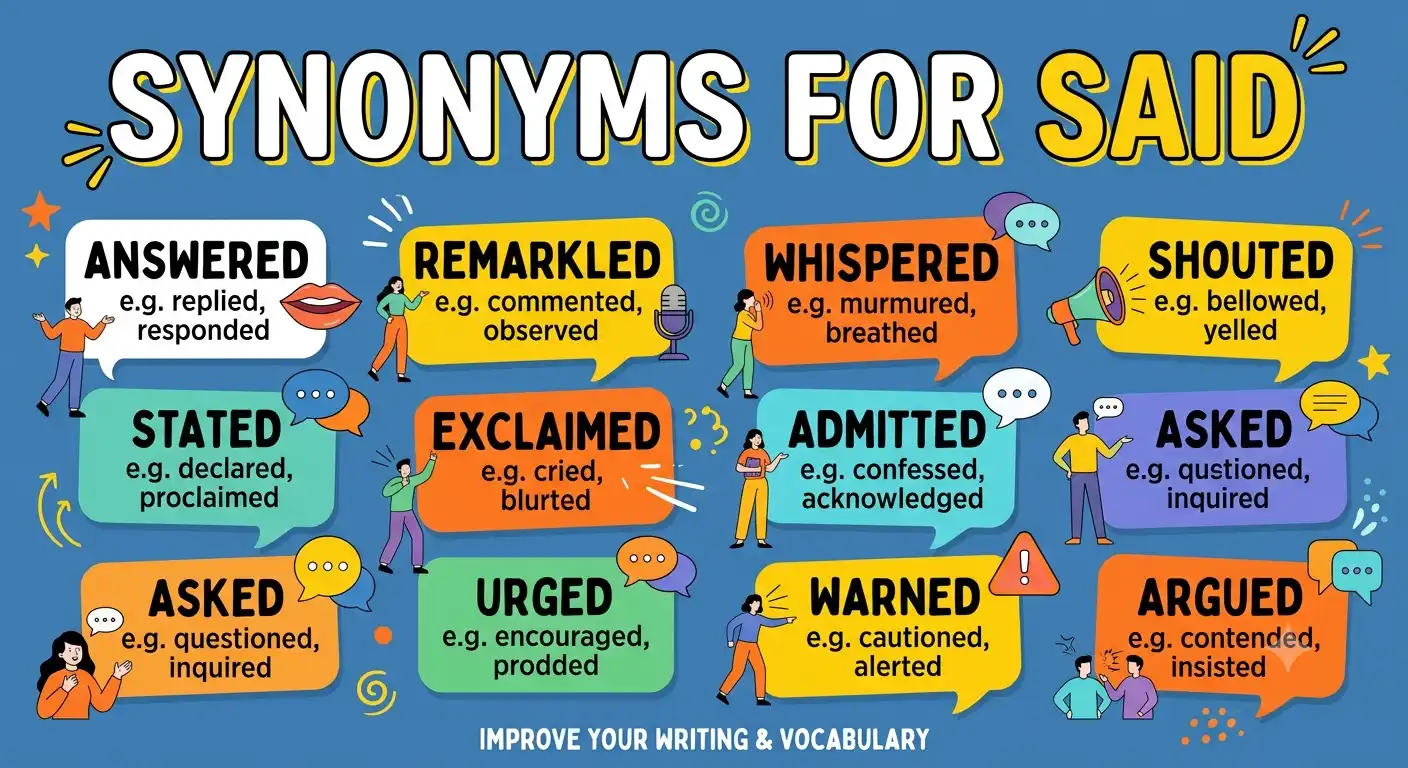
Finding the right synonyms for said helps you describe how someone speaks with perfect accuracy. When you search for synonyms for said, you are looking for specific ways to express shouting, whispering, asking, or stating something clearly. Mastering these synonyms for said allows you to move beyond basic dialogue tags and choose words that match the specific energy of your writing, whether you are describing a dramatic courtroom scene, a quiet romantic moment, or a loud argument.
Imagine you are writing a story about a detective solving a mystery. If every character just “said” their lines, the reader might get bored. But if one character “whispered” a secret and another “bellowed” a warning, the scene comes alive! Using synonyms for said changes flat text into a vibrant, living conversation. In simple English, synonyms for said are words that describe different ways of using your voice. These words are incredibly helpful for students writing stories, bloggers creating vivid content, professional copywriters building brand authority, and daily English users who want to be more expressive.
“Words are the threads of the tapestry that is your story.” — The Vocabulary Coach
“When you choose a better word than ‘said’, you turn a whisper into a shout.” — The Writing Expert
Linguistic Overview
- Connotative Meaning: Communication, expression, narration, and tone.
- Etymology:
- Synonyms: From Greek synonymon (“having the same meaning”).
- Said: From Old English secgan (“to utter, tell, speak”).
- Pronunciation:
- US IPA: /sed/
- UK IPA: /sed/
- Syllables: said (1)
- Affixation Pattern: Root say + suffix -d (past tense).
Comparison Table
| Keyword | Meaning | Usage Type | Context |
|---|---|---|---|
| Stated | To say something clearly and formally. | Formal | Reports, legal, professional. |
| Whispered | To speak very quietly using breath. | Emotional | Secrets, library, quiet moments. |
| Shouted | To speak very loudly with force. | Casual | Arguments, warnings, excitement. |
| Asked | To say something to get an answer. | Functional | Questions, interviews, daily life. |
| Replied | To say something back in response. | General | Conversations, emails, chats. |
Main Content: 50 Synonyms for Said
1. Stated
- Pronunciation: US: /ˈsteɪ.t̬ɪd/ | UK: /ˈsteɪ.tɪd/
- Meaning: You speak something clearly and officially.
- Examples:
- He stated the facts to the class.
- The report stated that it will rain today.
2. Whispered
- Pronunciation: US: /ˈwɪs.pɚd/ | UK: /ˈwɪs.pəd/
- Meaning: You speak very quietly using your breath.
- Examples:
- She whispered a secret in my ear.
- The students whispered during the movie.
3. Shouted
- Pronunciation: US: /ˈʃaʊ.t̬ɪd/ | UK: /ˈʃaʊ.tɪd/
- Meaning: You speak very loudly to be heard.
- Examples:
- He shouted to get our attention.
- They shouted at the winning team.
4. Asked
- Pronunciation: US: /æskt/ | UK: /æskt/
- Meaning: You speak to find out information.
- Examples:
- She asked me what time it was.
- I asked him for his name.
5. Replied
- Pronunciation: US: /rɪˈplaɪd/ | UK: /rɪˈplaɪd/
- Meaning: You speak back to answer someone.
- Examples:
- He replied to my email quickly.
- “I am ready,” she replied.
6. Exclaimed
- Pronunciation: US: /ɪkˈskleɪmd/ | UK: /ɪkˈskleɪmd/
- Meaning: You speak suddenly because you feel surprise or joy.
- Examples:
- “What a beautiful day!” he exclaimed.
- She exclaimed with delight at the gift.
7. Mumbled
- Pronunciation: US: /ˈmʌm.bəld/ | UK: /ˈmʌm.bəld/
- Meaning: You speak quietly and unclearly with your mouth closed.
- Examples:
- He mumbled his answer because he was shy.
- She mumbled something I could not hear.
8. Muttered
- Pronunciation: US: /ˈmʌt.əd/ | UK: /ˈmʌt.əd/
- Meaning: You speak in a low voice to yourself, often complaining.
- Examples:
- He muttered about the cold weather.
- She muttered under her breath in anger.
9. Yelled
- Pronunciation: US: /jeld/ | UK: /jeld/
- Meaning: You speak with a very loud, sharp voice.
- Examples:
- The coach yelled at the players to run.
- He yelled to warn me about the car.
10. Remarked
- Pronunciation: US: /rɪˈmɑːrkt/ | UK: /rɪˈmɑːkt/
- Meaning: You say something as an observation.
- Examples:
- “It is quite warm today,” he remarked.
- She remarked on how nice the garden looked.
“A precise verb is worth a thousand generic descriptors.” — The Literary Editor
11. Explained
- Pronunciation: US: /ɪkˈspleɪnd/ | UK: /ɪkˈspleɪnd/
- Meaning: You speak to make something easy to understand.
- Examples:
- He explained how the machine works.
- She explained the rules of the game.
12. Declared
- Pronunciation: US: /dɪˈklerd/ | UK: /dɪˈkleəd/
- Meaning: You speak strongly and officially.
- Examples:
- “I am the winner!” he declared.
- She declared that she would study hard.
13. Bellowed
- Pronunciation: US: /ˈbel.oʊd/ | UK: /ˈbel.əʊd/
- Meaning: You speak with a deep, loud roar.
- Examples:
- The giant bellowed for his dinner.
- He bellowed a command across the field.
14. Murmured
- Pronunciation: US: /ˈmɝː.məd/ | UK: /ˈmɜː.məd/
- Meaning: You speak in a soft, low, steady voice.
- Examples:
- The river murmured over the rocks.
- She murmured her thanks softly.
15. Queried
- Pronunciation: US: /ˈkwɪr.id/ | UK: /ˈkwɪə.rid/
- Meaning: You speak to ask a question or express doubt.
- Examples:
- “Is this correct?” he queried.
- She queried the strange bill.
16. Retorted
- Pronunciation: US: /rɪˈtɔːr.t̬ɪd/ | UK: /rɪˈtɔː.tɪd/
- Meaning: You speak back in a quick, sharp, or witty way.
- Examples:
- “At least I tried,” she retorted.
- He retorted immediately to the criticism.
17. Suggested
- Pronunciation: US: /səˈdʒes.tɪd/ | UK: /səˈdʒes.tɪd/
- Meaning: You speak to give an idea or plan.
- Examples:
- He suggested we eat pizza for lunch.
- She suggested a better way to do it.
18. Claimed
- Pronunciation: US: /kleɪmd/ | UK: /kleɪmd/
- Meaning: You speak to state something is true, maybe without proof.
- Examples:
- He claimed he found the lost key.
- She claimed the seat was hers.
19. Asserted
- Pronunciation: US: /əˈsɝː.t̬ɪd/ | UK: /əˈsɜː.tɪd/
- Meaning: You speak with confidence and firmness.
- Examples:
- He asserted his right to speak.
- She asserted that she was innocent.
20. Barked
- Pronunciation: US: /bɑːrkt/ | UK: /bɑːkt/
- Meaning: You speak in a short, harsh, loud way.
- Examples:
- He barked an order at the waiter.
- She barked back at him in annoyance.
21. Hissed
- Pronunciation: US: /hɪst/ | UK: /hɪst/
- Meaning: You speak with a sharp “s” sound, often in anger.
- Examples:
- “Get out!” he hissed in the dark.
- She hissed the warning into his ear.
22. Stammered
- Pronunciation: US: /ˈstæm.əd/ | UK: /ˈstæm.əd/
- Meaning: You speak with difficulty, repeating sounds.
- Examples:
- He stammered when he saw the boss.
- She stammered to explain her mistake.
23. Gasped
- Pronunciation: US: /ɡæspt/ | UK: /ɡɑːspt/
- Meaning: You speak while taking a quick breath because of shock.
- Examples:
- “I forgot my ticket!” she gasped.
- He gasped, “Run for cover!”
24. Cried
- Pronunciation: US: /kraɪd/ | UK: /kraɪd/
- Meaning: You speak loudly, often from strong emotion.
- Examples:
- “Help me!” the boy cried.
- She cried out in sudden happiness.
25. Screamed
- Pronunciation: US: /skriːmd/ | UK: /skriːmd/
- Meaning: You speak with a very high-pitched, loud sound.
- Examples:
- He screamed when he saw the spider.
- She screamed in excitement at the concert.
26. Announced
- Pronunciation: US: /əˈnaʊnst/ | UK: /əˈnaʊnst/
- Meaning: You speak to tell everyone something important.
- Examples:
- The principal announced the school trip.
- He announced that the meeting was over.
27. Proclaimed
- Pronunciation: US: /proʊˈkleɪmd/ | UK: /prəˈkleɪmd/
- Meaning: You speak to tell the public something proudly.
- Examples:
- The king proclaimed a day of rest.
- She proclaimed her love for the arts.
28. Confessed
- Pronunciation: US: /kənˈfest/ | UK: /kənˈfest/
- Meaning: You speak the truth about a secret or mistake.
- Examples:
- He confessed that he ate the cake.
- She confessed she was scared.
29. Admitted
- Pronunciation: US: /ədˈmɪt̬.ɪd/ | UK: /ədˈmɪt.ɪd/
- Meaning: You speak to agree that something is true.
- Examples:
- He admitted he was wrong.
- She admitted she liked the movie.
30. Vowed
- Pronunciation: US: /vaʊd/ | UK: /vaʊd/
- Meaning: You speak to make a serious promise.
- Examples:
- He vowed to never do it again.
- She vowed to win the game.
31. Promised
- Pronunciation: US: /ˈprɑː.mɪst/ | UK: /ˈprɒm.ɪst/
- Meaning: You speak to commit to doing something later.
- Examples:
- “I will be there,” he promised.
- She promised to bring the snacks.
32. Giggled
- Pronunciation: US: /ˈɡɪɡ.əld/ | UK: /ˈɡɪɡ.əld/
- Meaning: You speak while laughing in a silly way.
- Examples:
- “You look funny,” she giggled.
- He giggled while telling the joke.
33. Sneered
- Pronunciation: US: /snɪrd/ | UK: /snɪəd/
- Meaning: You speak in a mean or insulting way.
- Examples:
- “Is that all you have?” he sneered.
- She sneered at his new clothes.
34. Drawled
- Pronunciation: US: /drɔːld/ | UK: /drɔːld/
- Meaning: You speak slowly, stretching out the sounds.
- Examples:
- “Not today,” he drawled lazily.
- She drawled out her words in the sun.
35. Snapped
- Pronunciation: US: /snæpt/ | UK: /snæpt/
- Meaning: You speak in a sudden, angry, or short way.
- Examples:
- “Just leave me alone!” he snapped.
- She snapped at her brother.
36. Groaned
- Pronunciation: US: /ɡroʊnd/ | UK: /ɡrəʊnd/
- Meaning: You speak with a deep sound of pain or unhappiness.
- Examples:
- “Not another meeting,” he groaned.
- She groaned when she saw the homework.
37. Sighed
- Pronunciation: US: /saɪd/ | UK: /saɪd/
- Meaning: You speak after letting out a deep breath of sadness or tiredness.
- Examples:
- “It is too late,” he sighed.
- She sighed, “I am so tired.”
38. Bawled
- Pronunciation: US: /bɔːld/ | UK: /bɔːld/
- Meaning: You speak or cry in a loud, rough way.
- Examples:
- He bawled, “Give that back to me!”
- She bawled during the sad movie.
39. Chanted
- Pronunciation: US: /ˈtʃæn.t̬ɪd/ | UK: /ˈtʃɑːn.tɪd/
- Meaning: You speak words in a repetitive, musical tone.
- Examples:
- The fans chanted the player’s name.
- They chanted a song in the choir.
40. Quoted
- Pronunciation: US: /ˈkwoʊ.t̬ɪd/ | UK: /ˈkwəʊ.tɪd/
- Meaning: You speak someone else’s words exactly.
- Examples:
- He quoted the poem perfectly.
- She quoted what her mom said.
41. Answered
- Pronunciation: US: /ˈæn.sɚd/ | UK: /ˈɑːn.səd/
- Meaning: You speak because someone talked to you.
- Examples:
- He answered the phone on the first ring.
- She answered all the test questions.
42. Insisted
- Pronunciation: US: /ɪnˈsɪs.tɪd/ | UK: /ɪnˈsɪs.tɪd/
- Meaning: You speak to say something is very important.
- Examples:
- “You must go,” he insisted.
- She insisted on paying for dinner.
43. Argued
- Pronunciation: US: /ˈɑːr.ɡjuːd/ | UK: /ˈɑːɡ.juːd/
- Meaning: You speak to say why you disagree.
- Examples:
- They argued about which movie to watch.
- He argued that he was right.
44. Agreed
- Pronunciation: US: /əˈɡriːd/ | UK: /əˈɡriːd/
- Meaning: You speak to show you have the same idea.
- Examples:
- “Yes, I agree,” he agreed.
- She agreed to help with the project.
45. Objected
- Pronunciation: US: /əbˈdʒek.tɪd/ | UK: /əbˈdʒek.tɪd/
- Meaning: You speak to show you do not like a plan.
- Examples:
- He objected to the new rules.
- She objected to the high price.
46. Mentioned
- Pronunciation: US: /ˈmen.ʃənd/ | UK: /ˈmen.ʃənd/
- Meaning: You speak about something briefly.
- Examples:
- He mentioned that he was hungry.
- She mentioned her sister’s birthday.
47. Added
- Pronunciation: US: /ˈæd.ɪd/ | UK: /ˈæd.ɪd/
- Meaning: You speak to give one more thought.
- Examples:
- “And it is cheap,” he added.
- She added that she would bring cake.
48. Gushed
- Pronunciation: US: /ɡʌʃt/ | UK: /ɡʌʃt/
- Meaning: You speak with a lot of excitement.
- Examples:
- She gushed about how much she loved the book.
- He gushed about his new job.
49. Chattered
- Pronunciation: US: /ˈtʃæt̬.ɚd/ | UK: /ˈtʃæt.əd/
- Meaning: You speak very fast about unimportant things.
- Examples:
- She chattered about her day all evening.
- They chattered while walking in the park.
50. Emphasized
- Pronunciation: US: /ˈem.fə.saɪzd/ | UK: /ˈem.fə.saɪzd/
- Meaning: You speak to show that something is very important.
- Examples:
- He emphasized that we must not be late.
- She emphasized the need for hard work.
Antonyms of Said
- Silent: Making no sound at all.
- Mute: Unable or unwilling to speak.
- Quiet: Not making noise.
- Withheld: Keeping information back.
- Listened: Choosing to hear instead of speak.
Prototype Meaning and Categorization of Said
- Conceptual Category: Verbal Expression, Communication, Narration, Dialogue Tagging.
- Prototype Meaning: The act of using one’s voice or written text to communicate a message, thought, or idea.
- Semantic Domain: Linguistics, Literature, Education, Professional Communication, Daily Conversation.
FAQ
1. Why should I use synonyms instead of “said”?
Using synonyms adds emotion and clarity. It helps the reader understand how a character is speaking.
2. Is it okay to use “said” sometimes?
Yes! “Said” is invisible and neutral. Use it when you do not need to show strong emotion.
3. How do I know which synonym to pick?
Think about the character’s emotion. Are they angry? Use “snapped.” Are they quiet? Use “whispered.”
4. Can I use too many synonyms?
Yes. If you use big words every time, it can feel unnatural. Stick to simple words that fit the story.
5. What are the best synonyms for essays?
Use formal words like “stated,” “explained,” “argued,” or “asserted” for academic writing.
6. Where can I find more words?
Look at your favorite books! See how your favorite authors handle dialogue tags.
Conclusion
Mastering synonyms for said is a brilliant way to level up your communication. When you replace “said” with specific words like whispered, exclaimed, argued, or explained, your writing becomes deeper and your characters feel more real. Whether you are crafting a short story, writing a blog post, or just sending a text, your word choices shape how others perceive your message.
We encourage you to use these words in your daily life. Try to swap out “said” in your next email or text message to see how it changes the tone. You will quickly find that your language becomes more precise and your storytelling much stronger. Great writing is all about making intentional choices, so start building your vocabulary today and watch how your audience engages with your work. Language is a powerful tool, and you have the key to unlock its full potential with every sentence you write!
“The difference between the right word and the almost right word is the difference between lightning and a lightning bug.” — Mark Twain
“Your dialogue is the soul of your scene; treat it with care.” — The Writing Mentor

Andrew Collins is an academic English educator with over 12 years of experience helping university students, IELTS candidates, and ESL learners improve their writing vocabulary.